THULE CULTURE, MAINLAND ALASKA
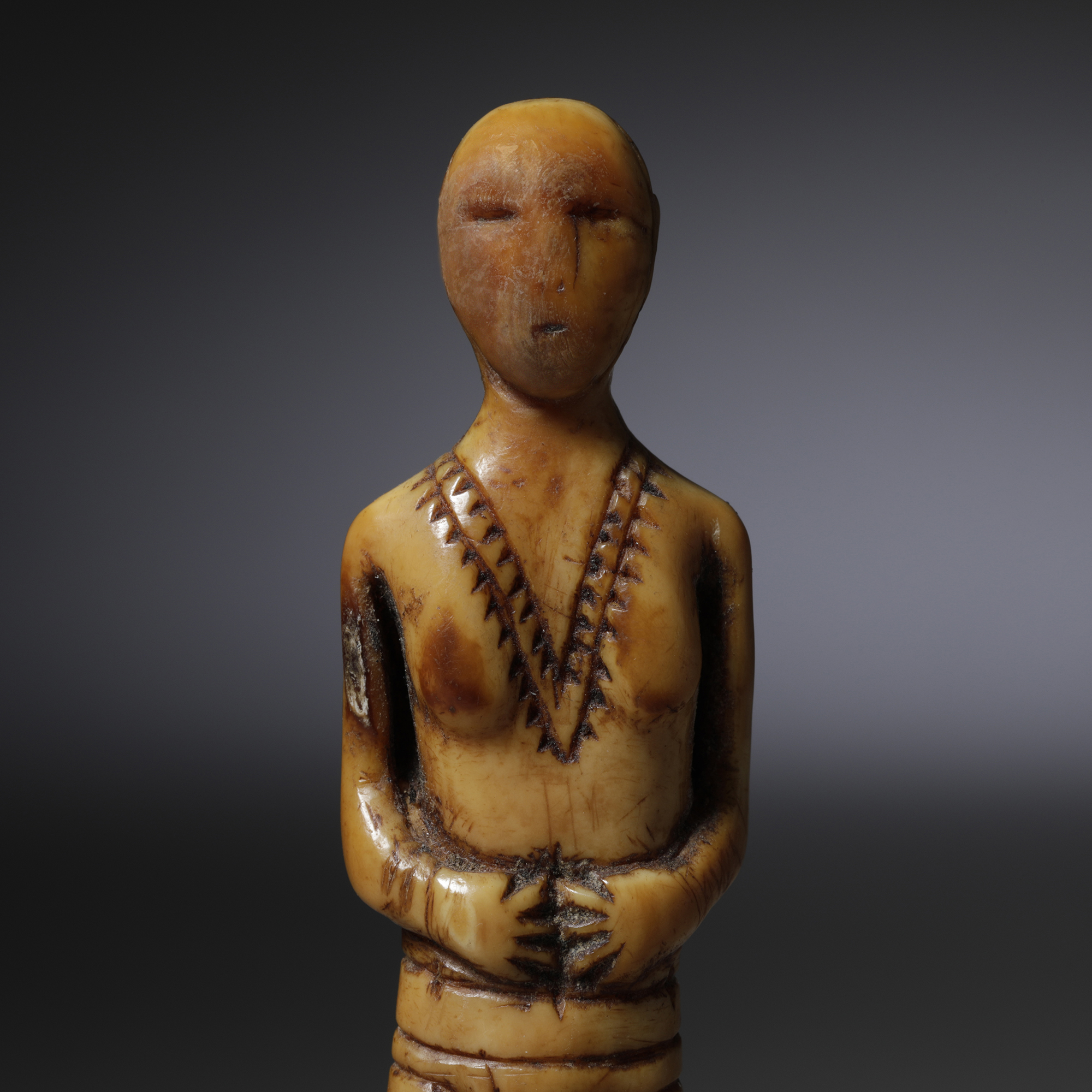
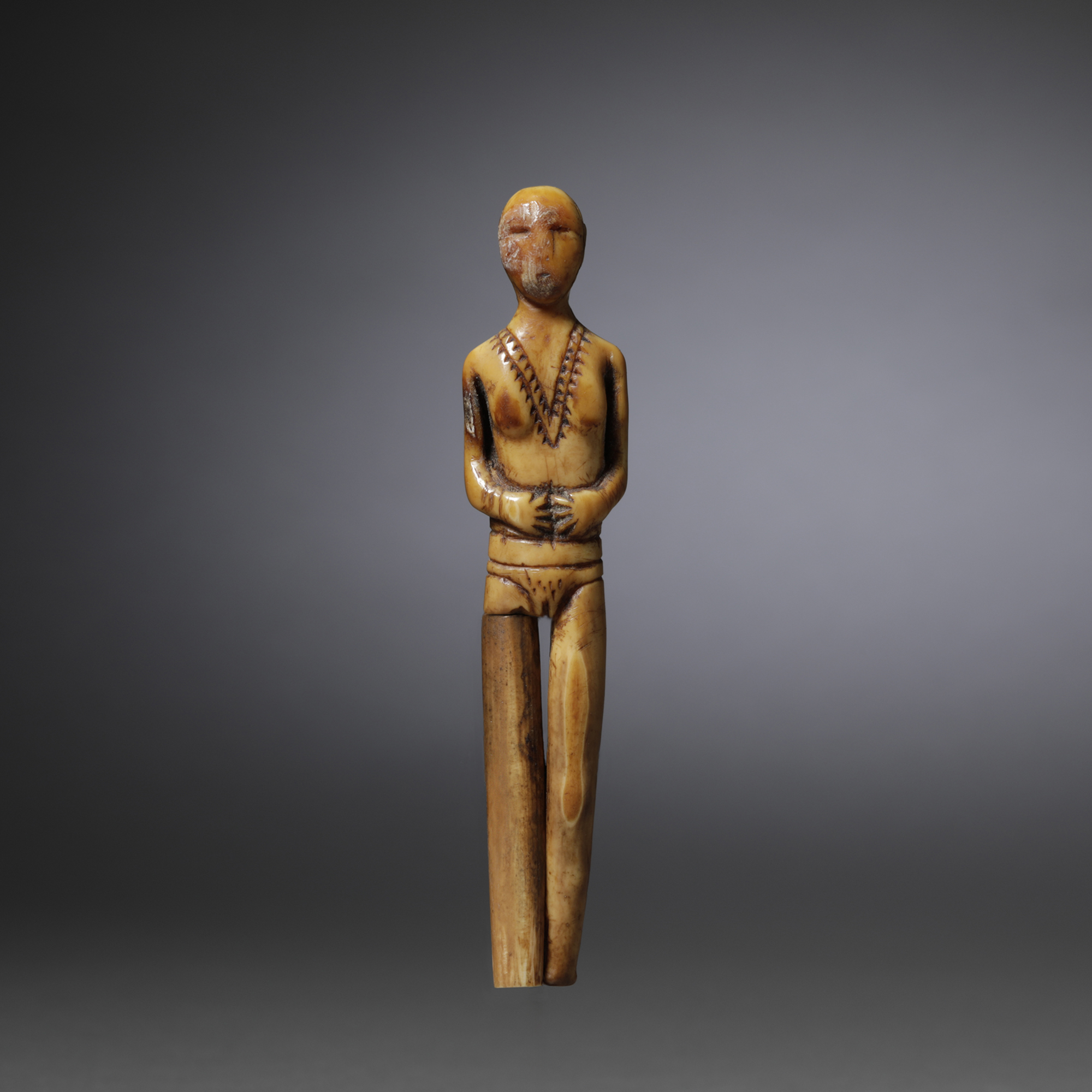
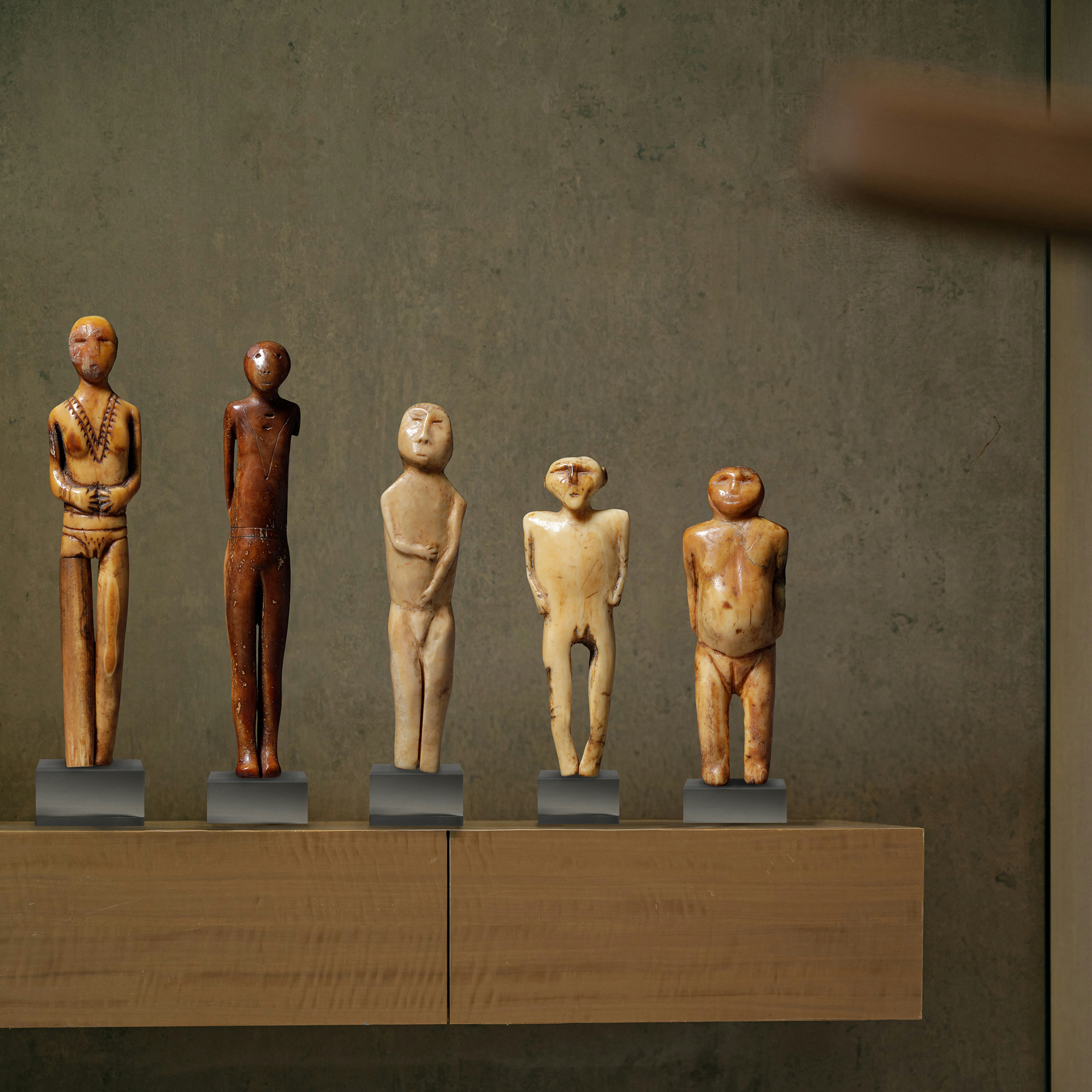
The five works assembled here comprise an exceptionally rare and evocative group of Inuit ivory dolls. Dating from the 17th century or earlier, each of them are lovingly carved with remarkable sensitivity and cultural depth. Fashioned from walrus ivory, a material prized for its durability and luminous surface, these miniature figures embody the history and storytelling traditions of Arctic life.
The collection showcases a variety of regional styles and techniques, from delicately incised facial features to subtleties of posture, the rendering of traditional garments, and degrees of abstraction. While some hint at joviality and others express a more reserved attitude, they all share a sense of candid and honest, humble humanity. Each doll reflects the sculptor’s unique perspective on form and proportion as well as the cultural significance of play, family, and identity within Inuit life.
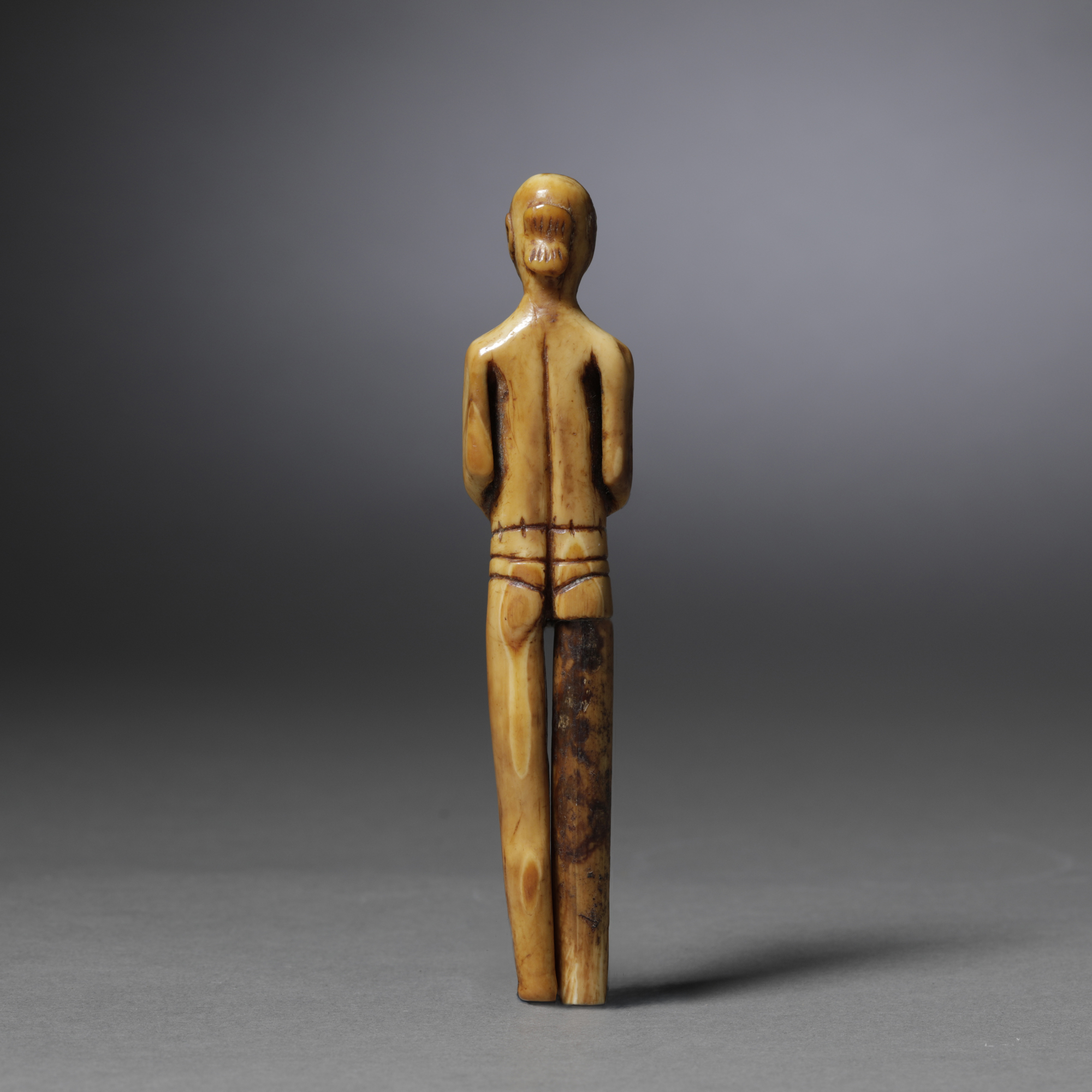
Carved by both men and women, these figures would have served as children’s toys and teaching tools, introducing young hands to the family roles, clothing, customs, and skills essential to survival in the far North. The dolls often wore miniature parkas, boots, and mittens, teaching children how garments were constructed and layered for warmth. In some cases, small carved figures held ritual or spiritual meaning, perhaps as amulets or representations of ancestors or spirits. In the nineteenth century and beyond, some ivory dolls were also made for trade with outsiders, including whalers and explorers. These were often slightly larger or more elaborately carved. In good condition. This doll was excavated with a replacement leg - as far as we are aware this is the only example found with a replacement leg.