INUIT PEOPLE, ALASKA
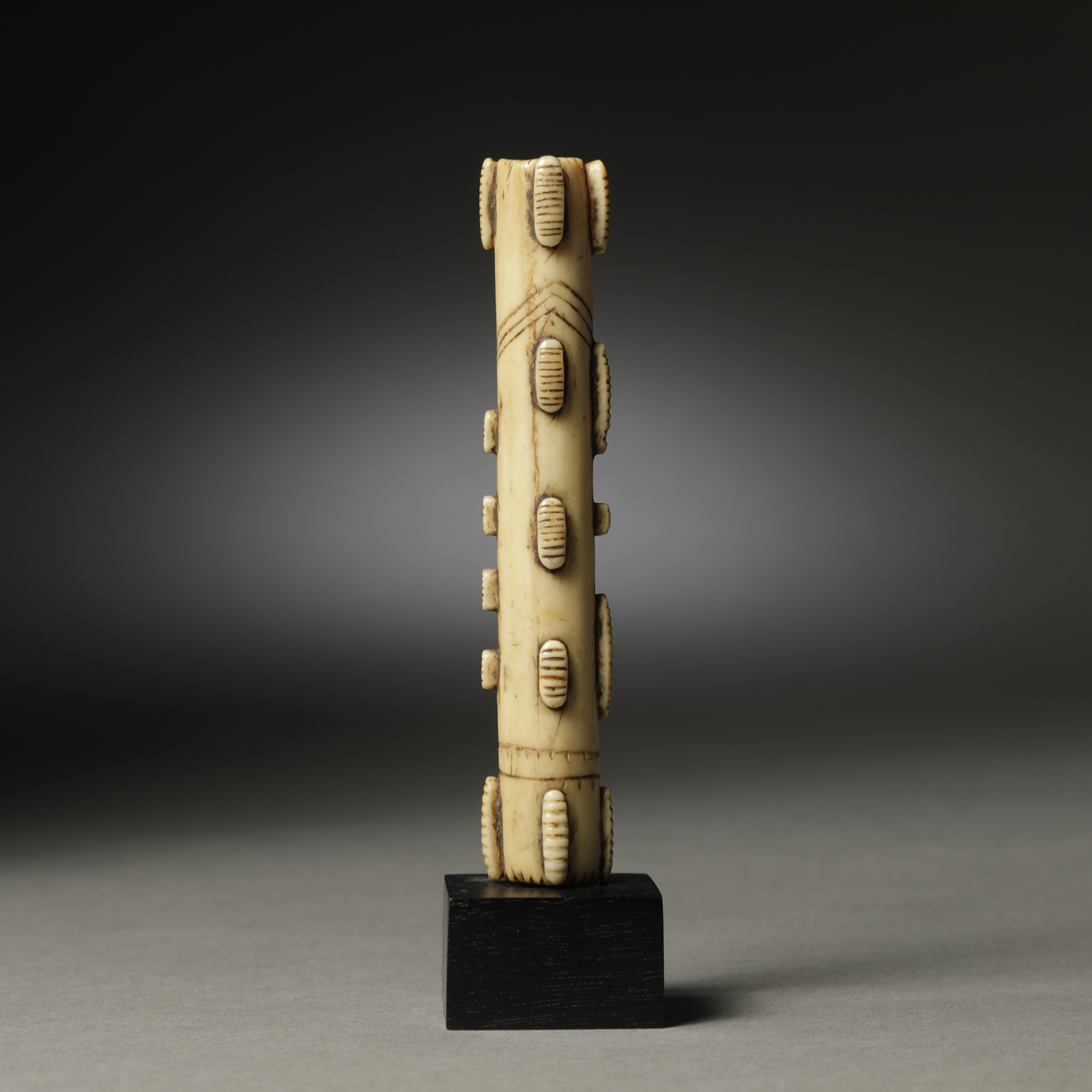
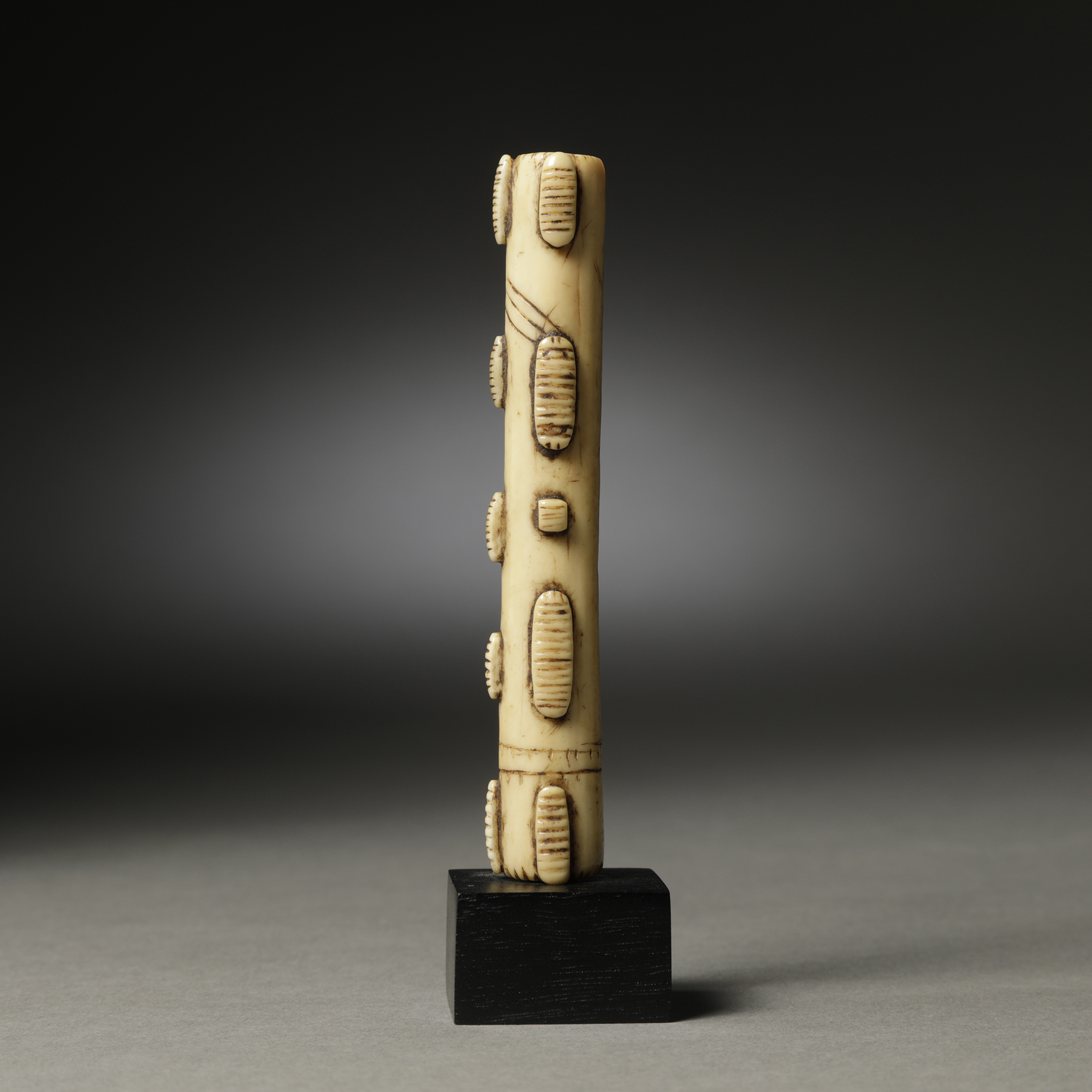
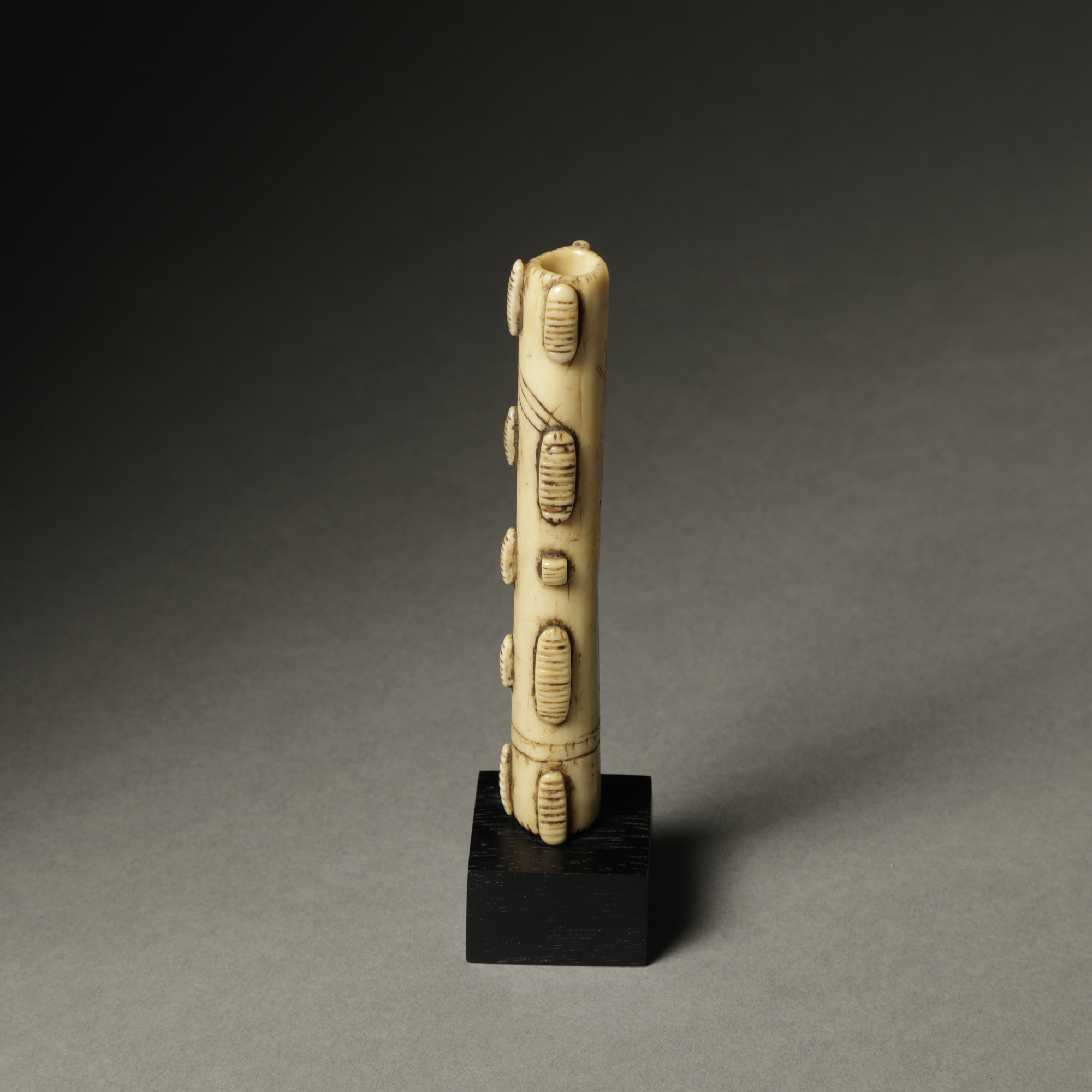
This finely crafted needle case, carved from a single piece of walrus ivory, exemplifies both the utility and aesthetic sensibility of nineteenth-century Inuit material culture. The slender, cylindrical form is elaborated with ovular projections — possibly representing insect larvae – carved in relief around most of its circumference.
Needle cases such as this one were used to store bone or metal sewing needles, essential tools in an Arctic culture where tailored hide and gut clothing was crucial for survival. The case would often be paired with a gut or sinew cord, sometimes attached to a thread waxer or thimble, which together formed a complete sewing kit.
The unmistakable level of artistic care that was invested in this humble tool underlines its importance in daily life. Moreover, the use of ivory, a durable and precious material, speaks to its value as a personal and symbolic item that was likely passed down through generations.
In the animistic view of many indigenous Arctic cultures, animals and indeed all objects in the natural world are inhabited by souls and have distinct spiritual significance. Although less commonly depicted than marine mammals or polar bears, insect forms such as larvae or grubs carry associations with transformation, resilience, perseverance, humility, hidden potential, and the power of the earth itself.
Michael Evans, Santa Fe