The long Arctic winter — months of darkness, confined quarters, the qasgiq or family dwelling filled with the sounds and warmth of people pressed close together — generated its own rich interior culture of storytelling, music, and games. Among the most widespread of Inuit and Yup'ik games were those involving sets of carved animal pieces strung on sinew cord, the object being to swing the pieces and catch them on a pin or hook with a single fluid motion. Skill, speed, and the particular weight and balance of each carved piece all mattered. The best pieces were made with care, and kept.
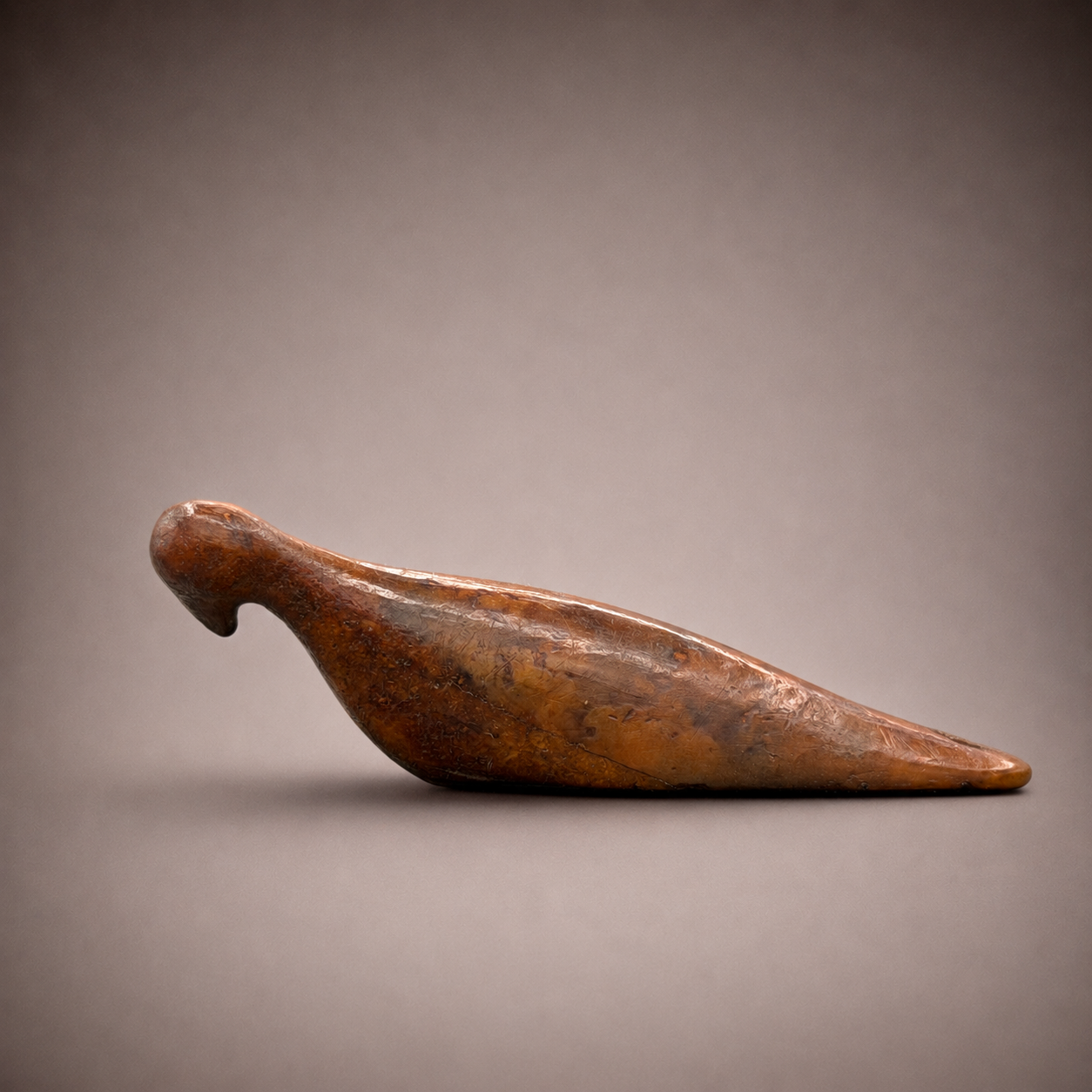
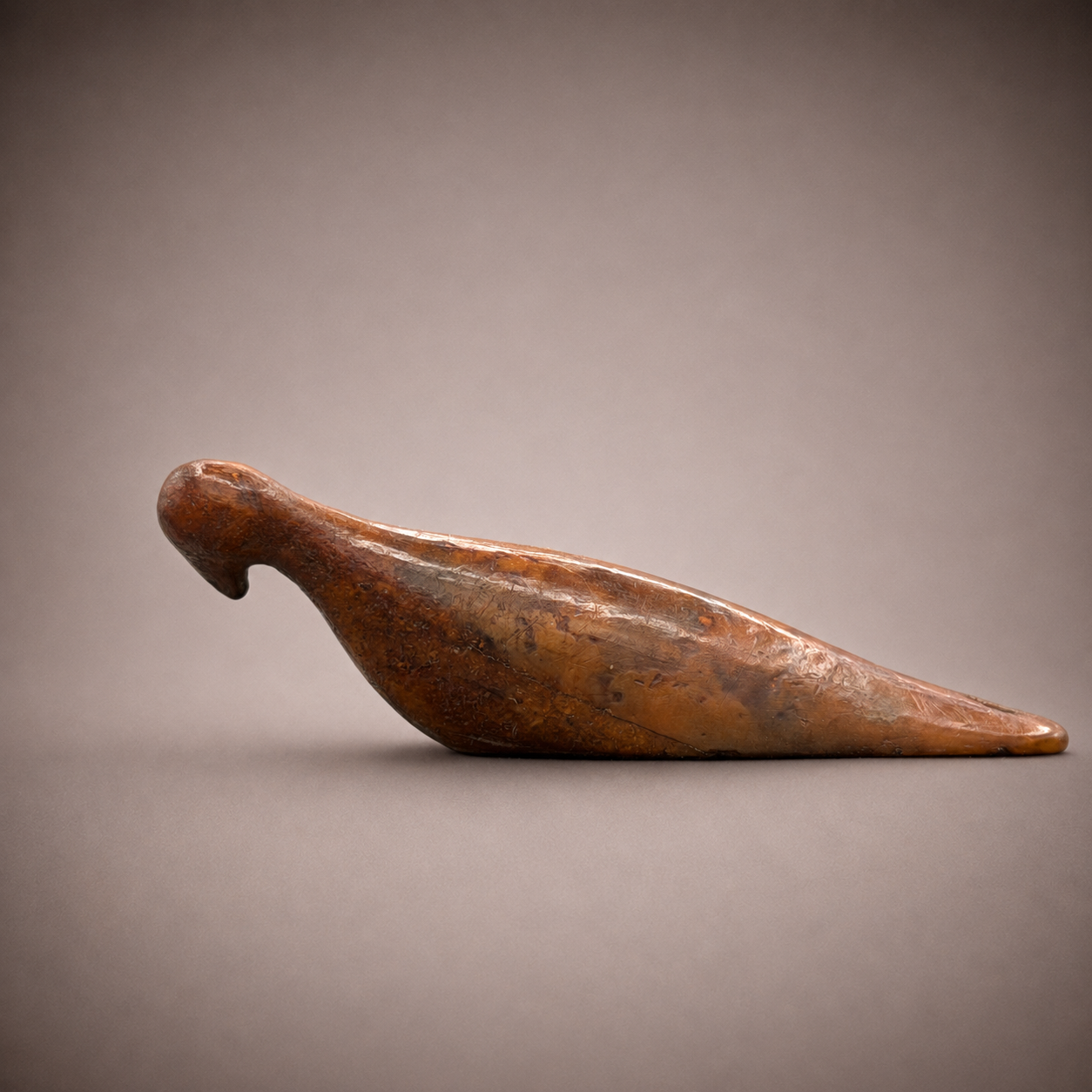
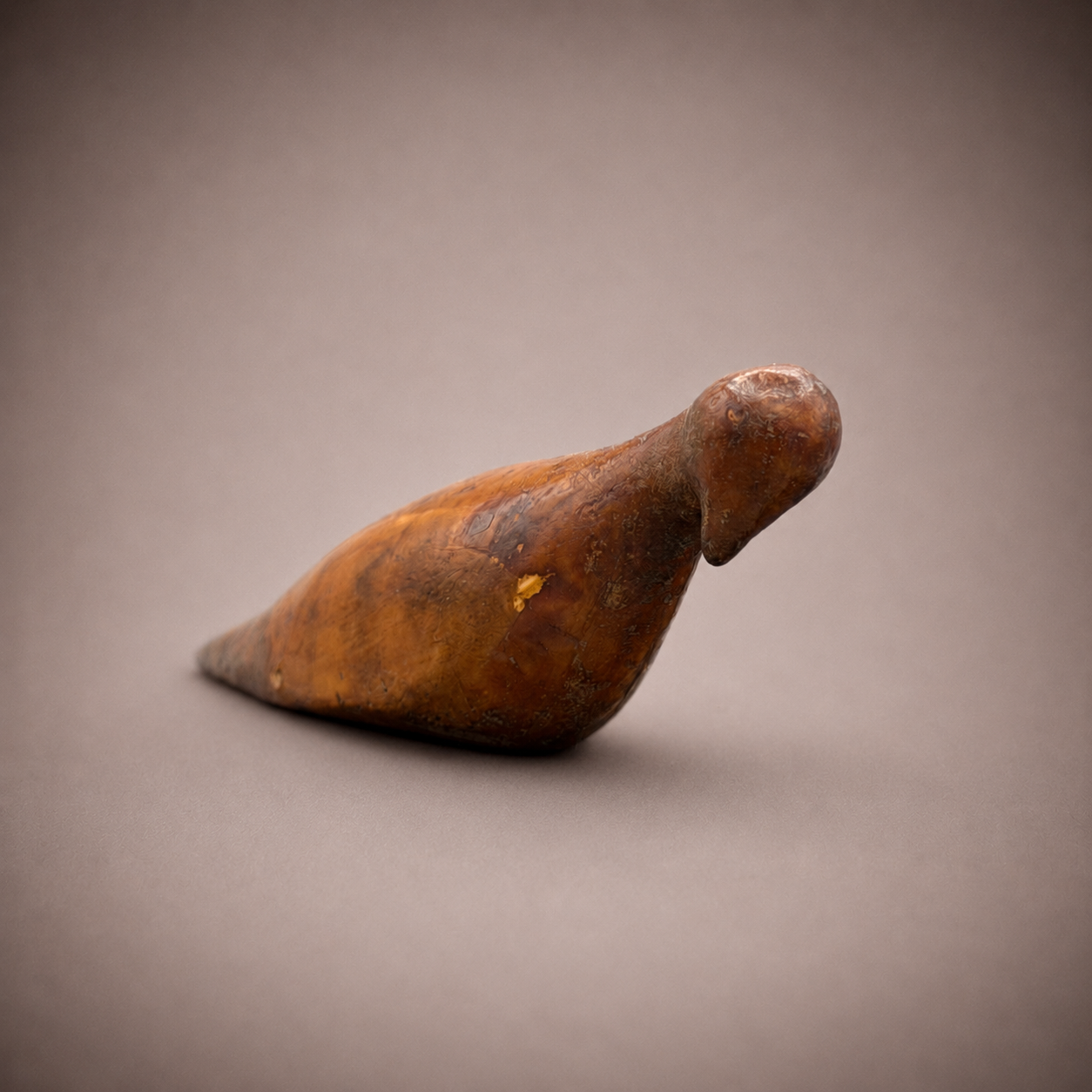
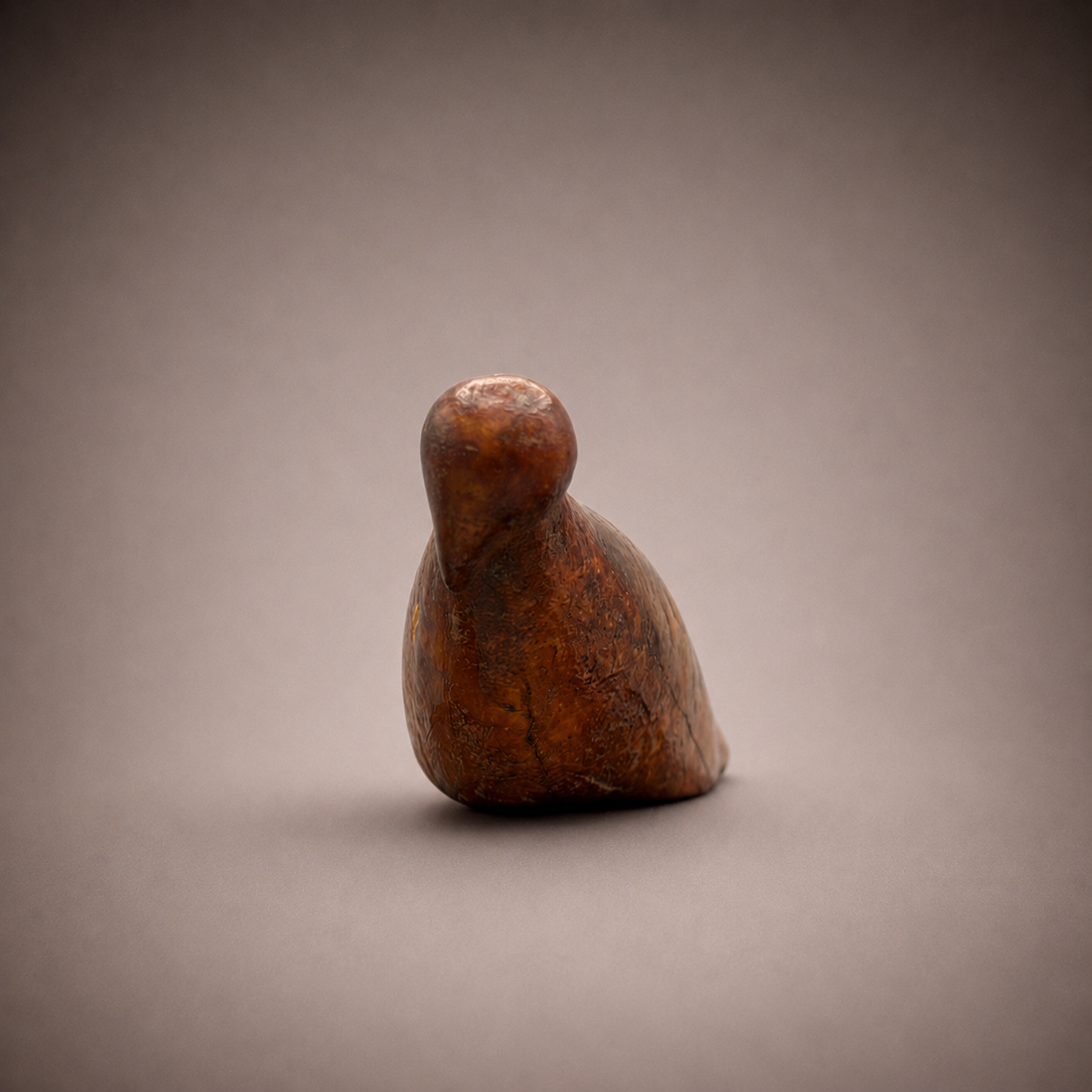
This resting bird is one such piece — a gaming token of exceptional quality, carved from walrus ivory or dense marine mammal bone that has aged over many decades to a deep, warm amber-brown. The form is a ground-nesting game bird at rest — a ptarmigan or eider settled flat, body a long low wedge tapering from rounded breast to fine tail tip, the profile as close to the tundra as the bird itself would make it. The head is the carving's quiet masterstroke: small, rounded, turned and tilted at a gentle angle that gives the resting bird an expression of relaxed alertness — one eye open, aware but unhurried, entirely at ease in its moment. A single precise notch defines the beak. Nothing more was needed.
Into the back, a smooth oval cavity runs the full dorsal length — scooped clean and well-finished, its interior darkened with age and use. On a gaming piece of this type the cavity reduced weight, adjusted balance, and gave the piece its particular flight and spin when swung on the cord. Near the tail, a drilled suspension hole accepted the sinew that connected this bird to its set — thread worn smooth by long use, the hole's edges burnished by the passage of cord across many winter evenings of play.
The surface throughout carries the accumulated evidence of that use: fine random scratches, worn edges, a burnished sheen on the highest points where hands have passed most often. No carved decoration was applied — the form itself was considered sufficient, and correctly so.
Private US Collection