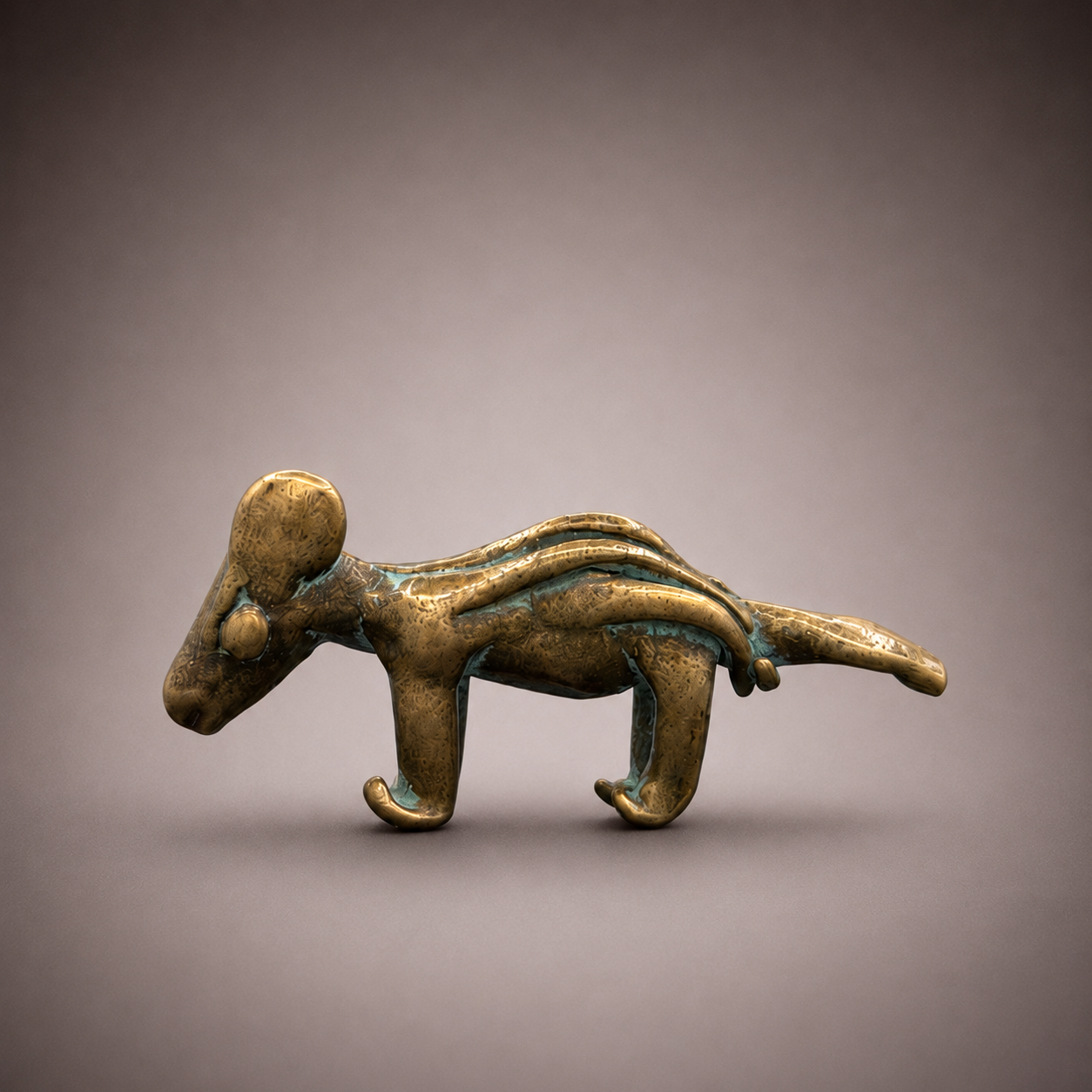
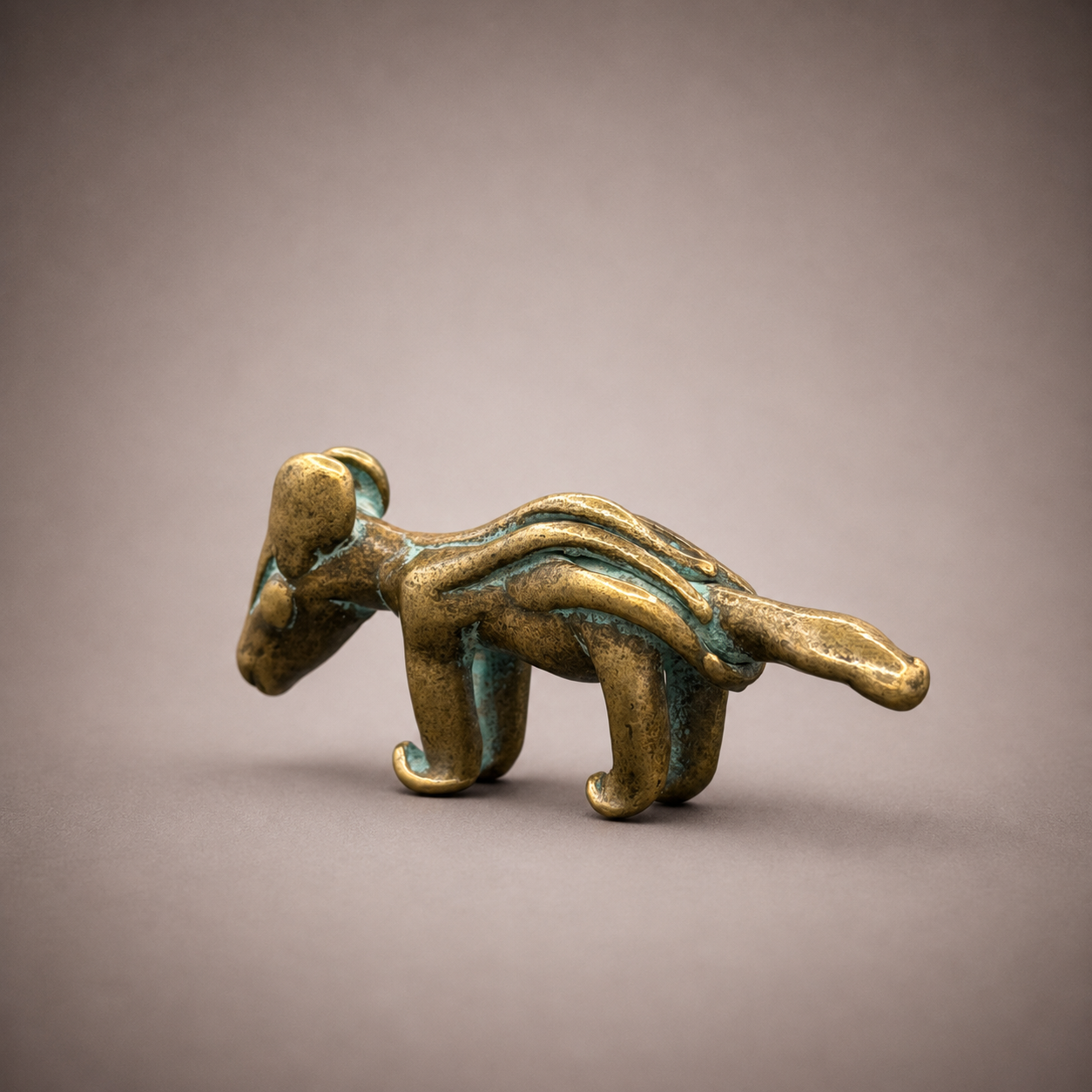
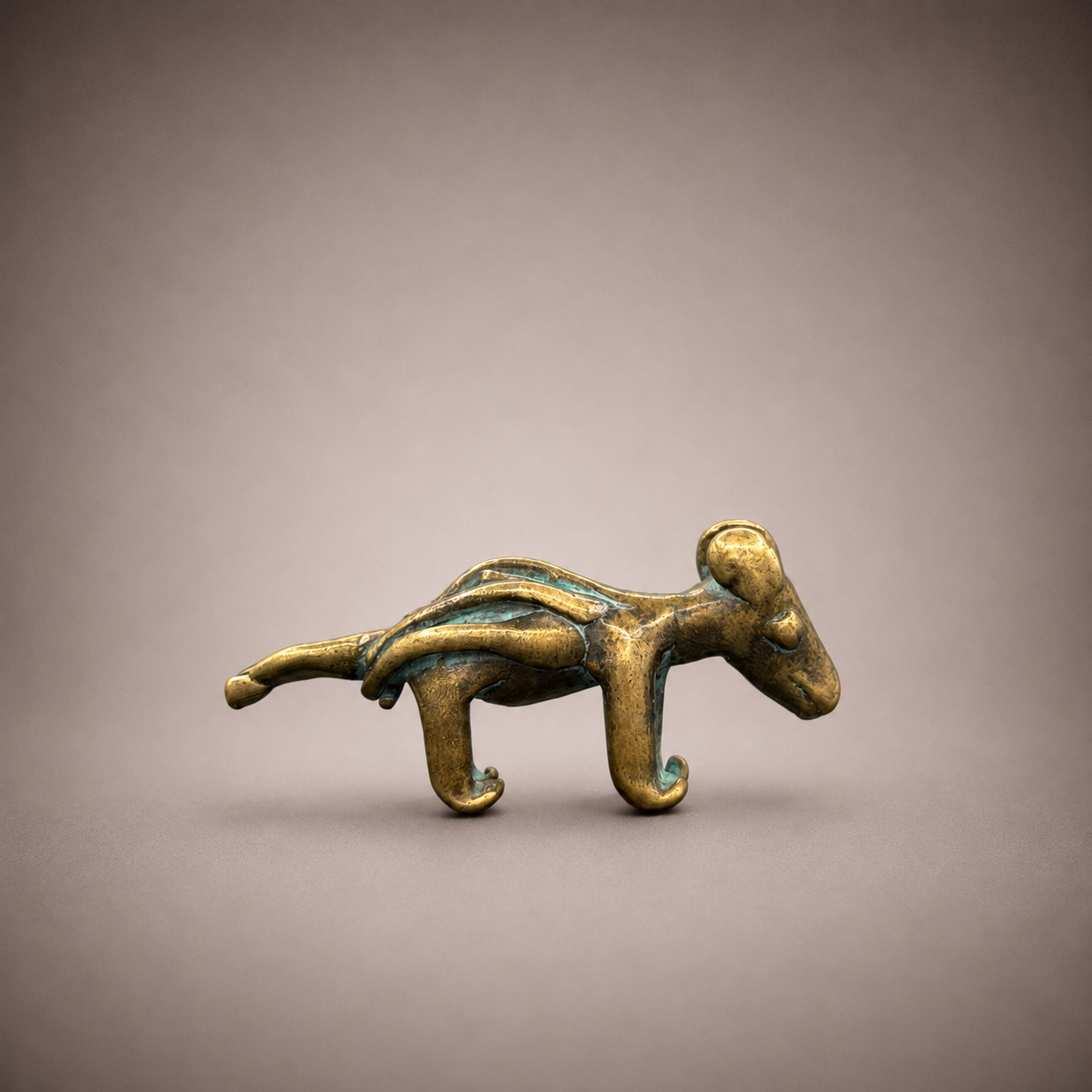
A boldly modeled figurative goldweight (abrammuo) in the form of a four-legged animal — most plausibly a ram, given the rounded, bulbous head, curling horn-like protrusion, and compact, muscular body — rendered in the schematic, energetically abstracted manner characteristic of late-period Akan figural casting. The piece shows the naturalistic economy typical of Akan animal weights: four splayed legs with rounded hooves, a strong arching back, and a tail extended rearward as a counterbalance. Vivid blue-green verdigris patina pools in the recessed areas between the legs and along the spine, contrasting richly with the warm golden-brown of the high relief surfaces. Cast using the lost-wax technique, these figurative weights served both as practical instruments for measuring gold dust in trade transactions and as culturally encoded objects embodying Akan proverbs and moral principles. Figurative weights of this kind first appear around 1600 AD, and many symbolize well-known proverbs, riddles, and codes of conduct central to Akan cultural life.
Irena Corwin. Irena Corwin was a ballet dancer and actress who later became a jewelry designer in New York in the 1960s and 1970s.