HAWAII ISLANDS
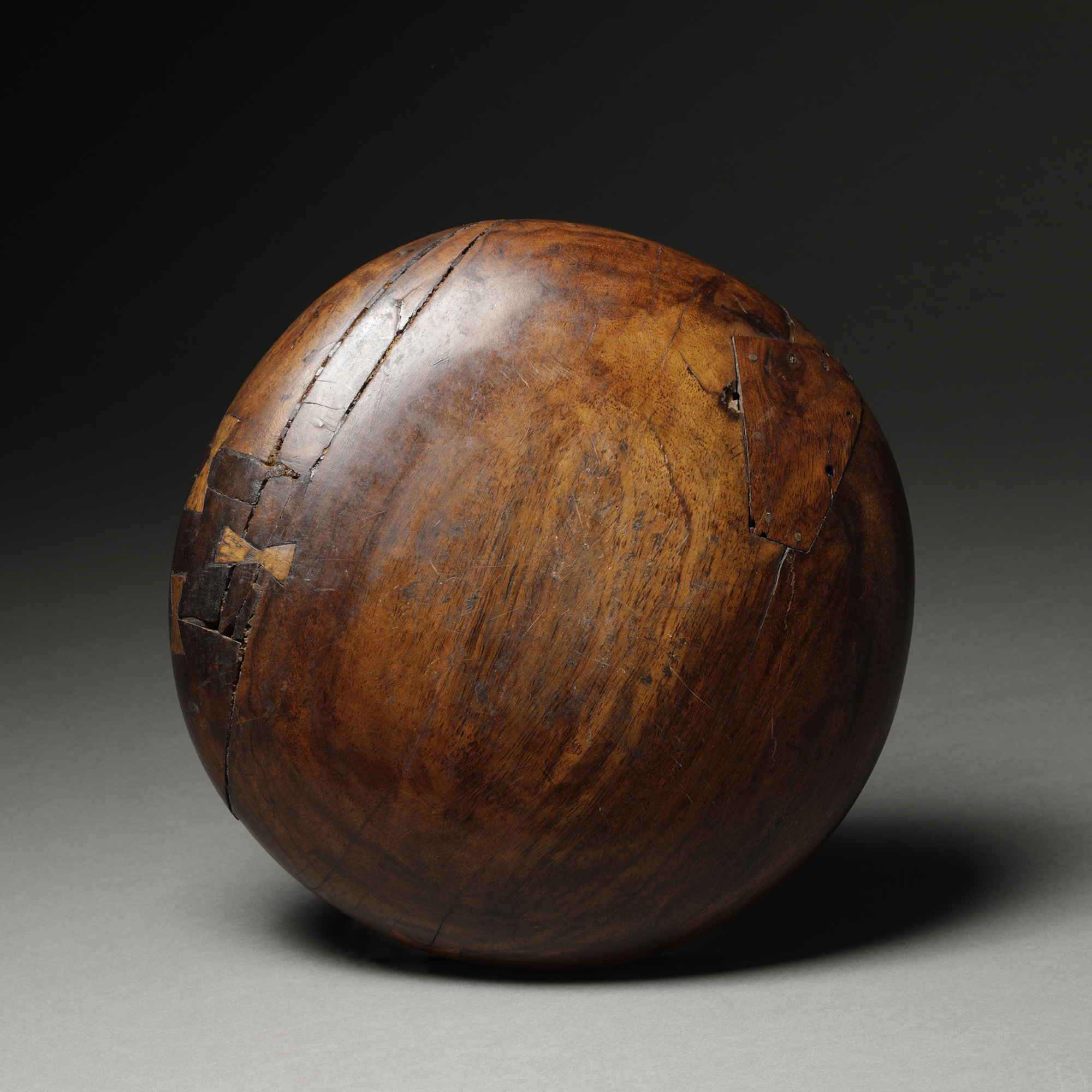
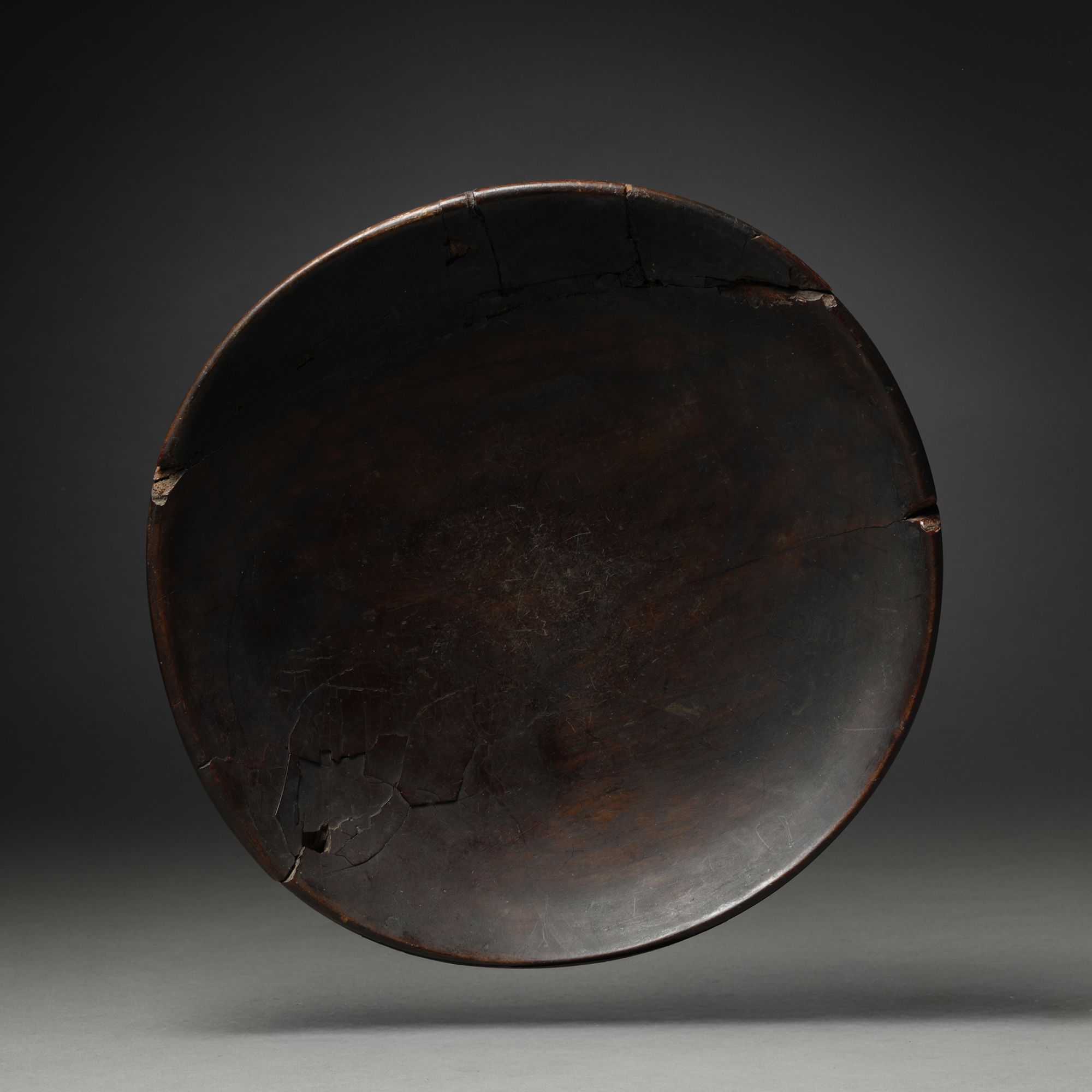
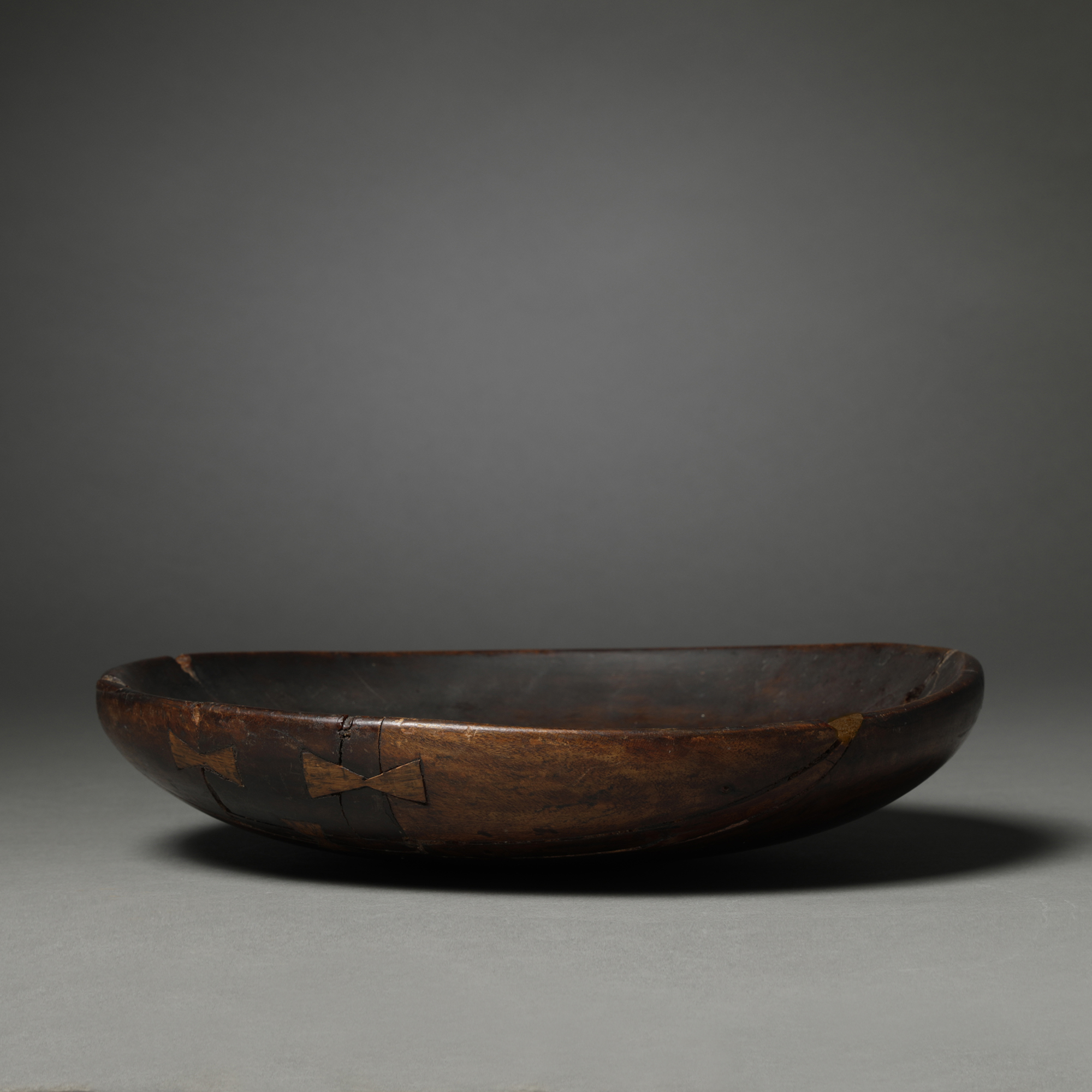
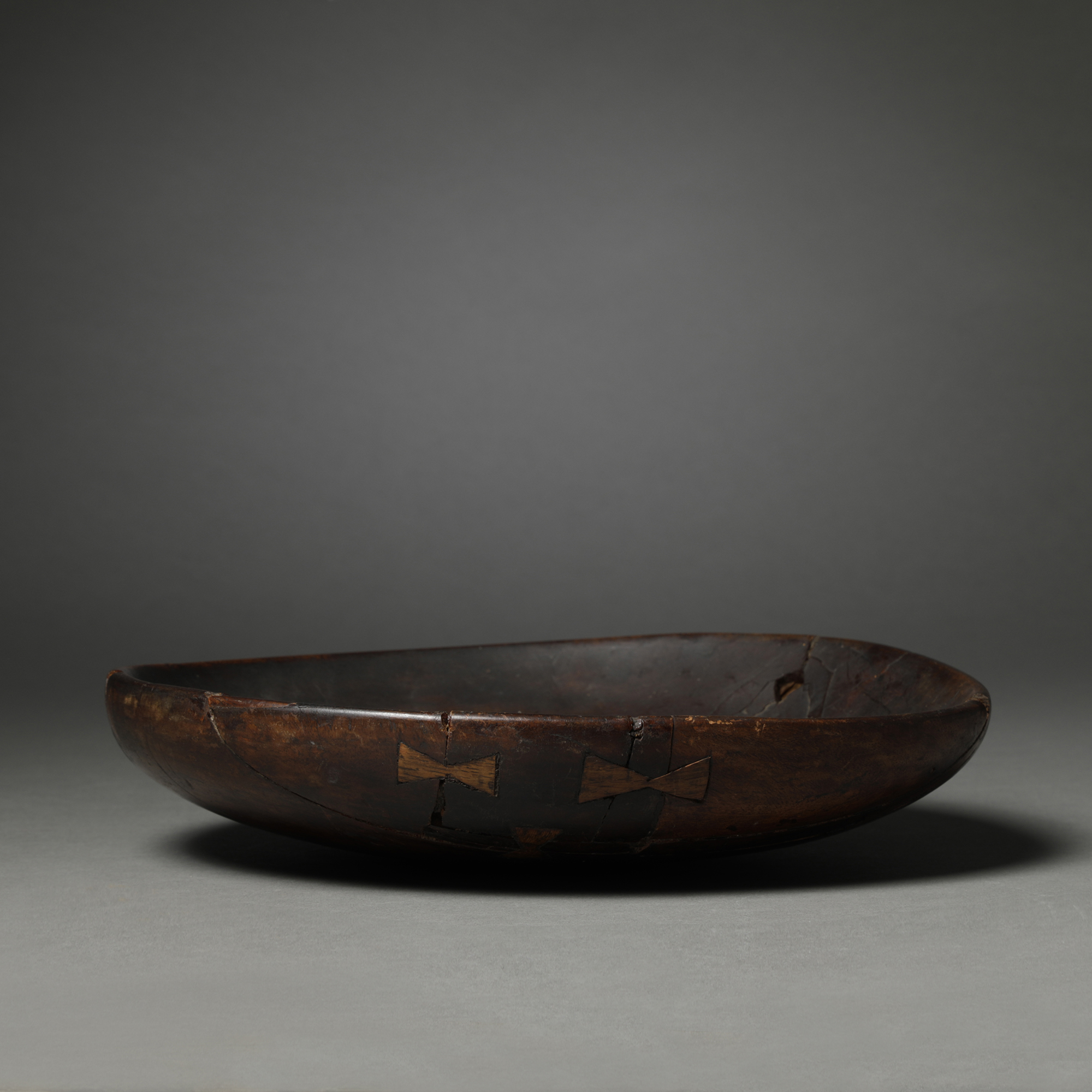
An exceptionally elegant shallow wooden serving dish from the Hawaiian Islands, distinguished by its beautifully balanced proportions, restrained sculptural form, and remarkable evidence of prolonged use and indigenous repair. Carved from a single piece of wood, the dish presents a broad, gently concave interior enclosed by a thin, subtly rounded rim. Its low, hemispherical profile and uninterrupted contours reveal the Hawaiian carver's refined understanding of volume, proportion, and the expressive possibilities of the simplest forms.
The exterior displays a particularly attractive, richly variegated patina, its warm honey and reddish-brown tones deepening to darker shades along the edges and areas of wear. The smooth, gently swelling underside retains subtle traces of the original carving and the fine grain of the wood, lending the object an appealing organic quality. In striking contrast, the interior has acquired a deep, almost black surface, apparently charred through exposure to heat or fire. This darkened surface, with its subtle variations in tone and texture, creates a powerful visual contrast with the luminous exterior and contributes significantly to the dish's character and sculptural presence.
Of particular interest are the numerous indigenous repairs distributed around the circumference of the vessel. Carefully fashioned wooden butterfly-shaped inserts bridge several fractures along the rim and exterior, while additional fitted patches reinforce areas of damage. These repairs, executed with considerable ingenuity and precision, have become an integral part of the object's visual character. Far from diminishing its beauty, they introduce a compelling secondary geometry to the otherwise unadorned surface, their angular forms providing a striking counterpoint to the vessel's soft, continuous curves. They also speak to the importance of preserving and maintaining valued wooden vessels within traditional Hawaiian society.
Wooden bowls and serving dishes occupied an important place in Hawaiian material culture, where skilled craftsmen produced vessels ranging from modest domestic utensils to finely finished objects associated with chiefly households. Prized for their utility, durability, and beauty, such vessels exemplify a woodworking tradition in which sophisticated craftsmanship was expressed through purity of form rather than applied ornament.
The present example is particularly compelling for the intimate relationship between its original conception and the accumulated history of its use. The charred interior, richly worn exterior, and carefully executed repairs together create a remarkable record of its working life. Its modest scale and shallow proportions lend it an understated elegance, while the juxtaposition of dark and luminous surfaces, organic curvature, and geometric restoration gives the dish an almost contemporary sculptural sensibility.
With its extraordinary simplicity, deeply expressive patina, and poignant evidence of preservation, this small serving dish embodies the quiet sophistication of traditional Hawaiian woodcarving, transforming an everyday vessel into an object of exceptional beauty and historical resonance.
Private California collection