Among the Igbo of southeastern Nigeria, the ikenga stands as one of the most philosophically charged categories of personal shrine objects on the continent. Its name translates loosely as "place of strength" or "power of the right hand" — the hand that wields the tool, draws the bow, strikes the enemy, and signs the agreement. Every man of standing owned one. It was fed, spoken to, and held accountable. When a man died, his ikenga was sometimes split in two, severing the compact between the living and the force that had animated his striving.
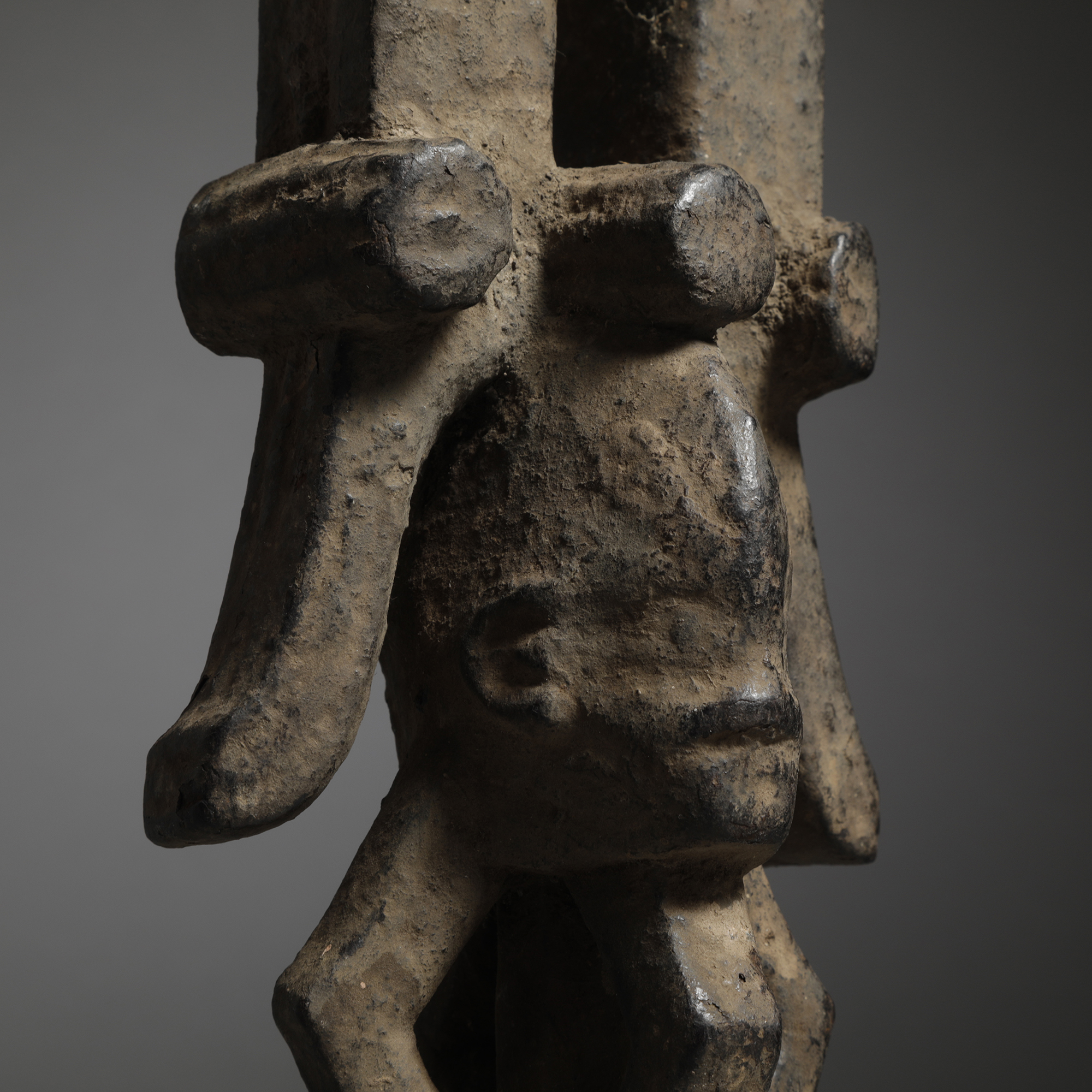
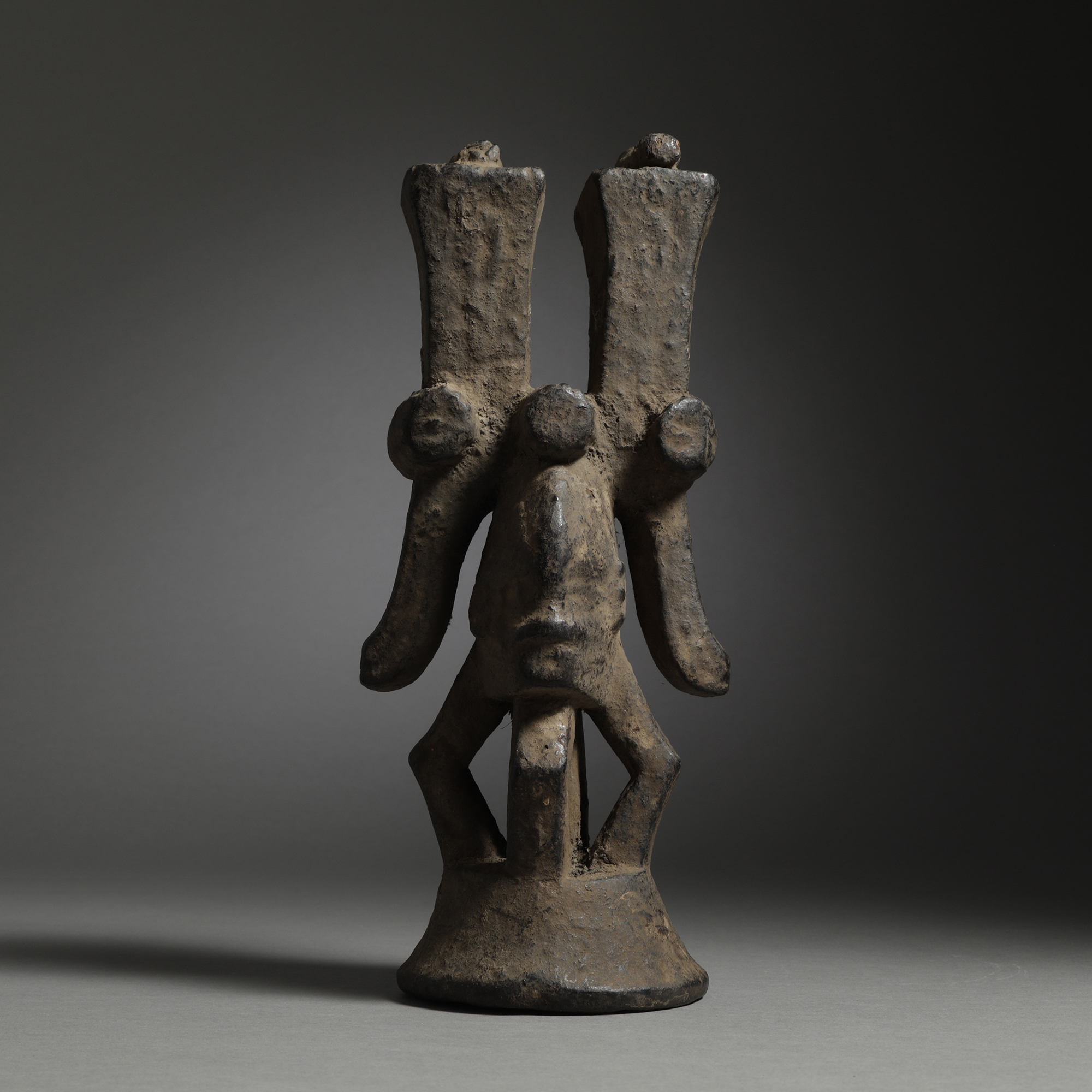
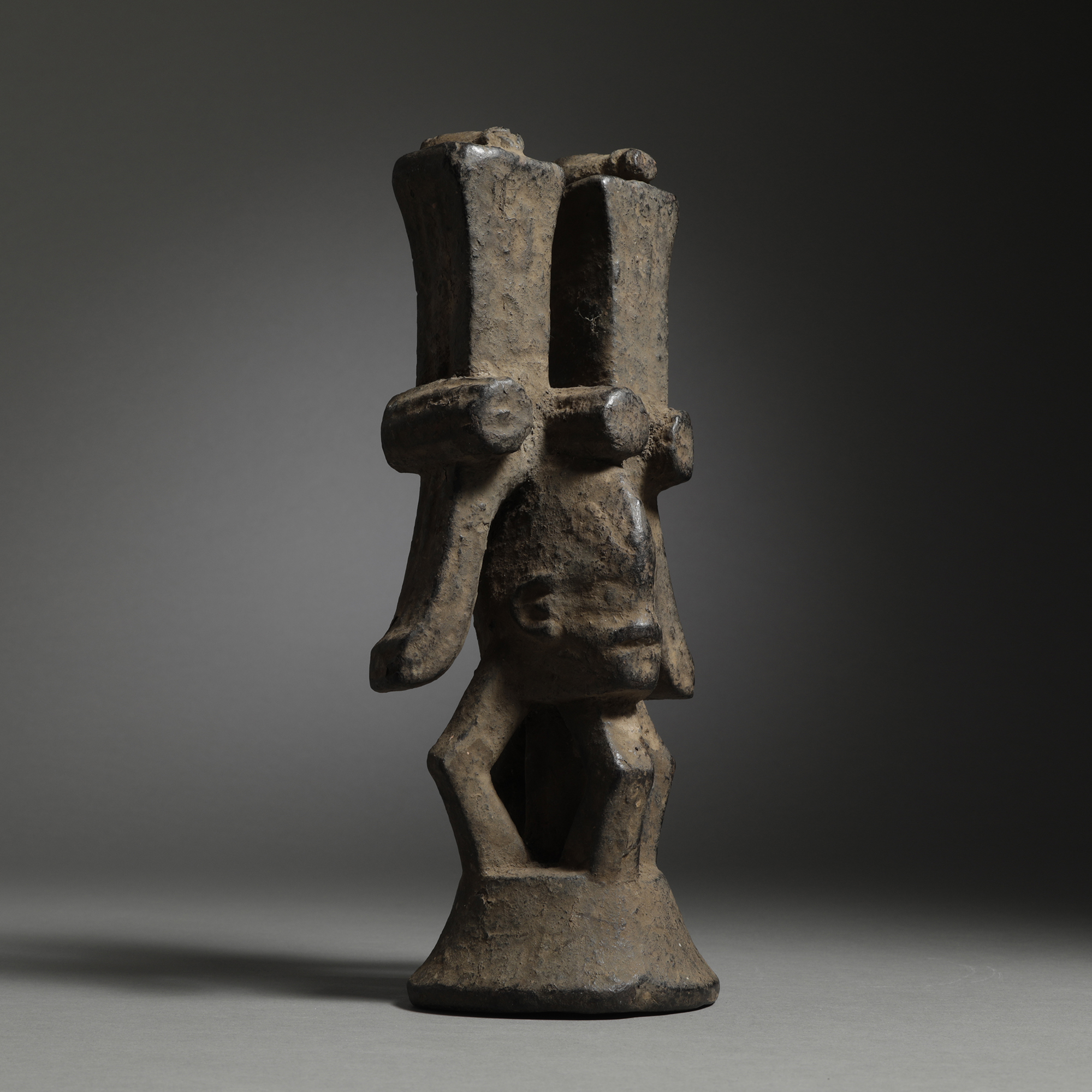
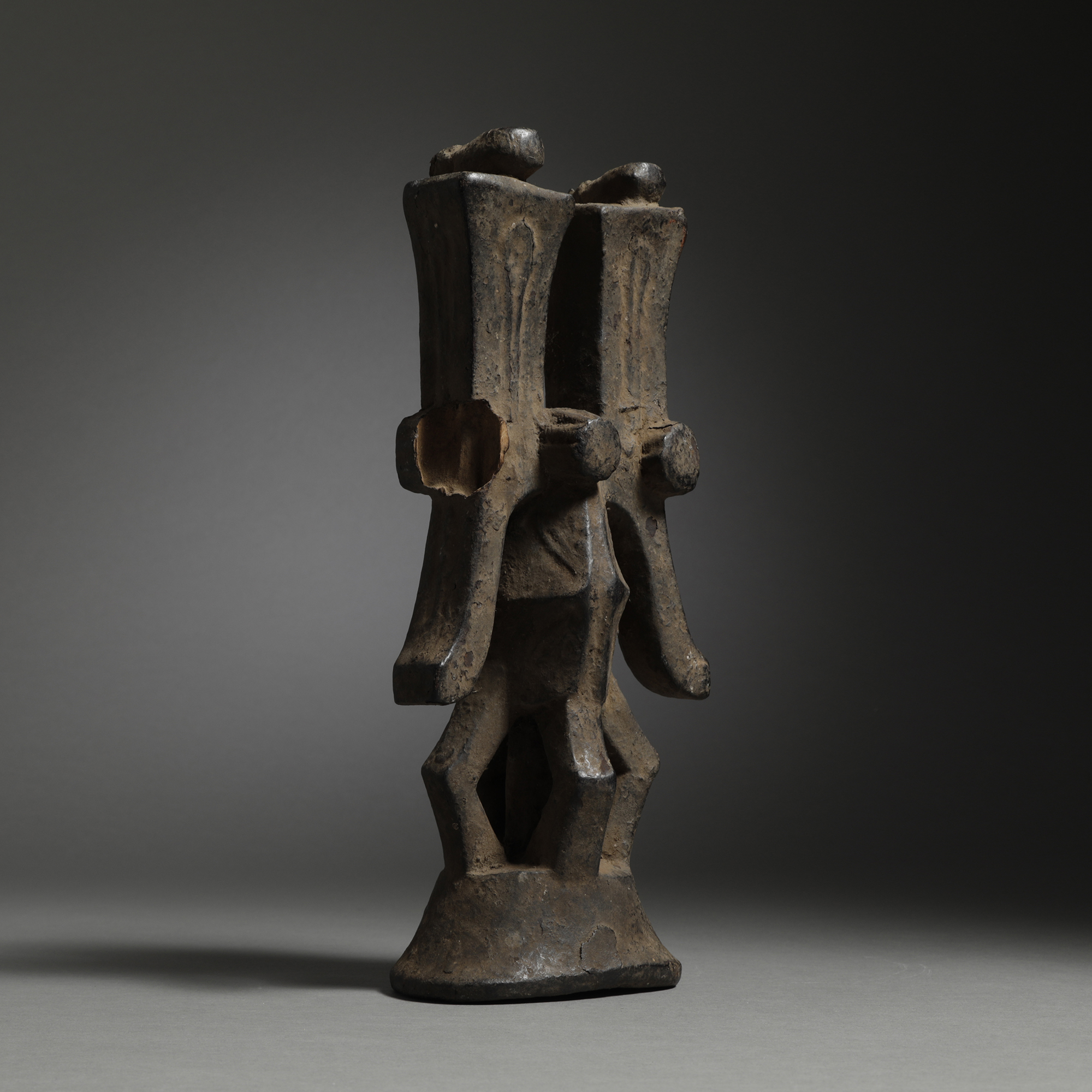
This example presents the form in its most potent distillation. Two great horns — bold, planar, and slightly flared at their tips — erupt from the crown of the figure, reaching upward with an authority that borders on aggression. They are not decorative; they are the visual grammar of chi, of vital force directed outward into the world. At the apex of each horn a small rounded head emerges, subtle presences that expand the figure's register beyond the individual — ancestors or attendant forces implicated in the owner's achievements, silent witnesses to every libation poured.
The figure is compact and powerful: a broad-shouldered torso with rounded chest projections — likely scarification marks rendered in the round, a sign of initiated status — arms held close, and legs slightly parted above the wide flared base that grounds the whole composition. The face is schematic and inward-looking, a surface that receives attention rather than performing it. This is a figure built for veneration, not display.
The patina is the object's most eloquent testimony. The surface is densely encrusted, matte and variegated, built up through repeated applications of palm wine, kola nut, and animal sacrifice over many years of active shrine use. The recesses are blackened; the high points have been worn to a softer tone by handling. This is not the patina of age alone — it is the accumulated record of a life's ambitions, setbacks, and victories, compressed into wood and offering.
John and Nancy Hyde Devoe, New York. Acquired circa 1960’s-1970’s