MAORI PEOPLE, NEW ZEALAND
Rare and finely worked nineteenth-century greenstone hand clubs (pounamu patu or mere pounamu) are powerful embodiments of Māori craftsmanship, tradition, and cultural identity. Carved from New Zealand nephrite jade (pounamu) – a material treasured for its beauty, strength, and spiritual significance – patu served both as a close-combat weapon and as a potent symbol of mana (authority, prestige) and whakapapa (ancestral lineage).
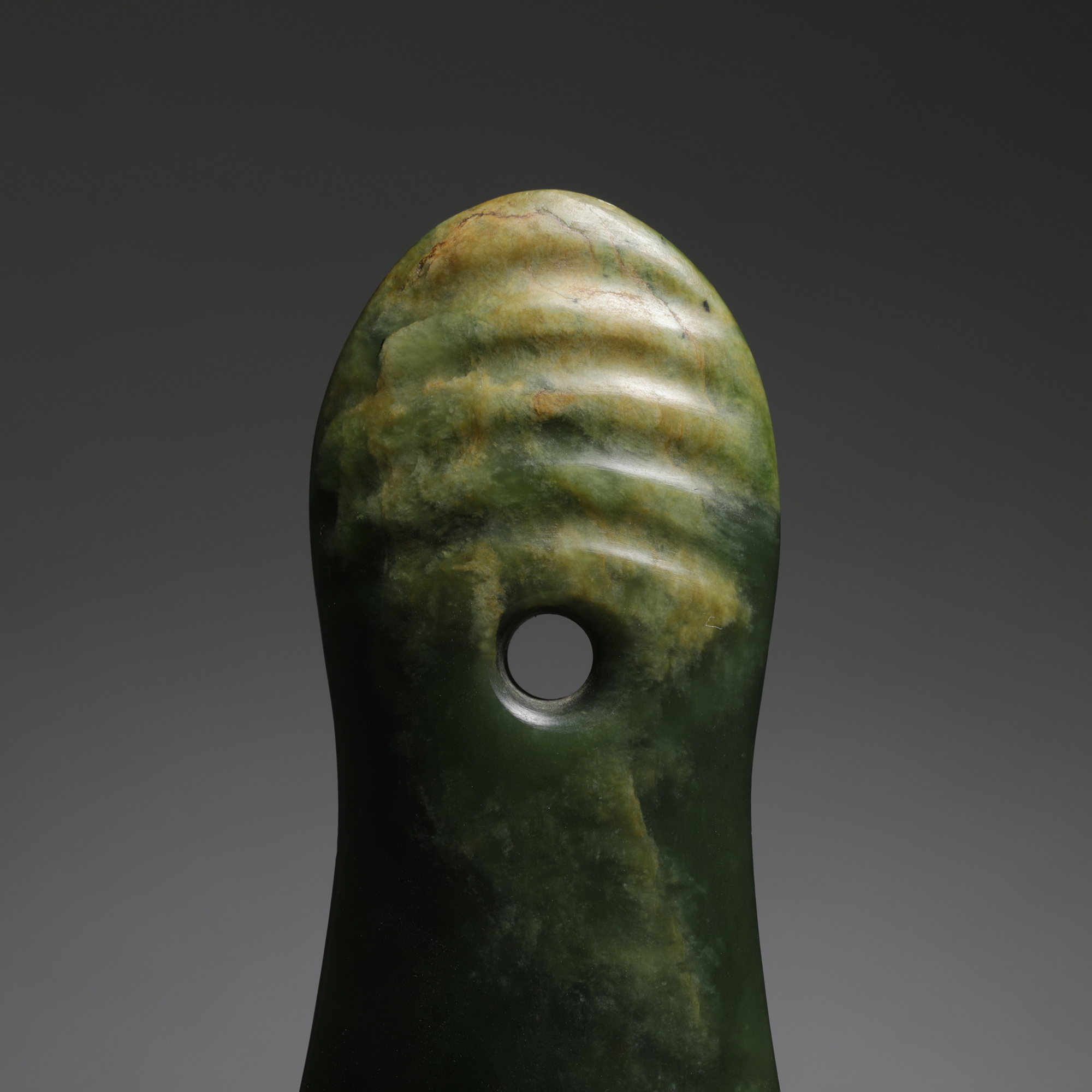
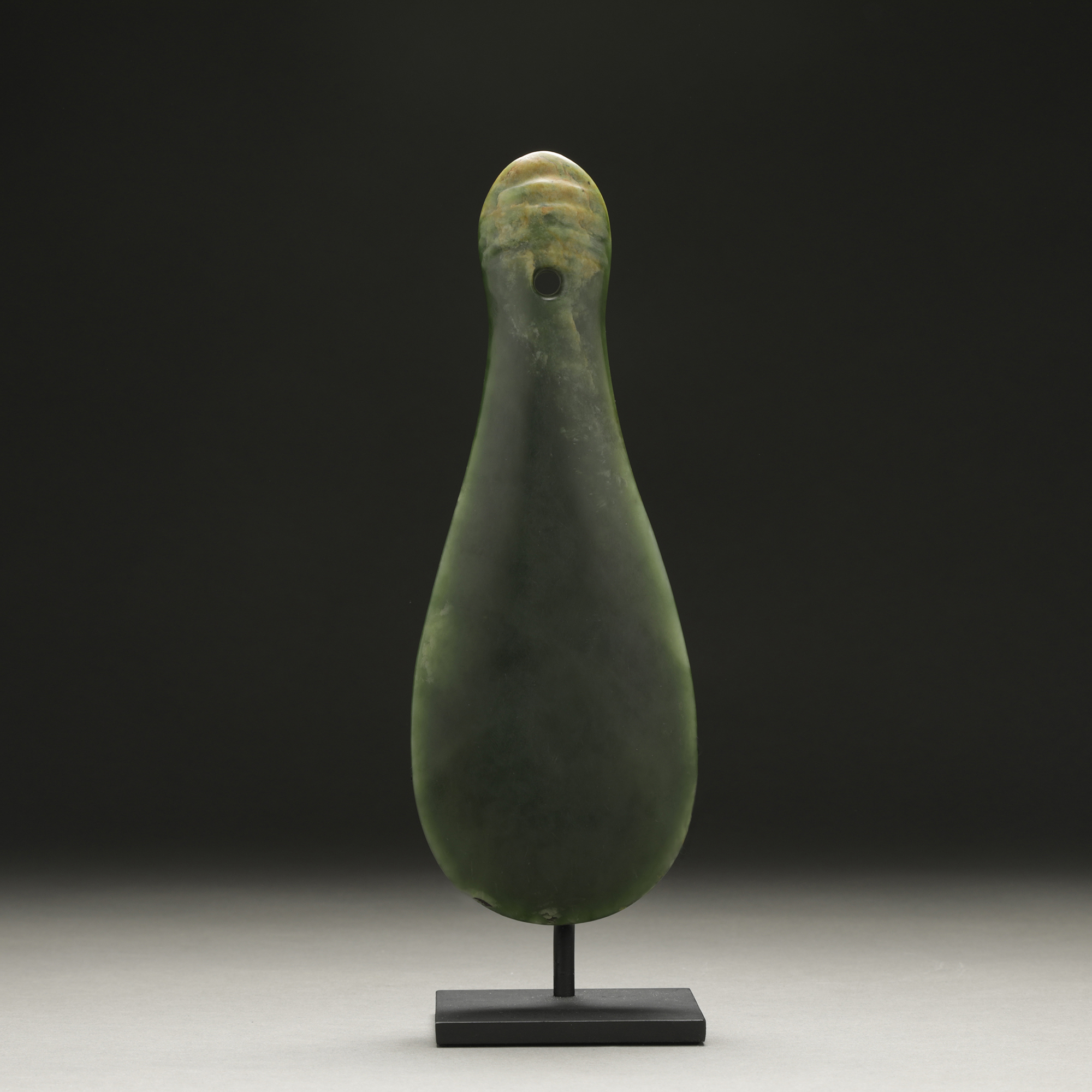
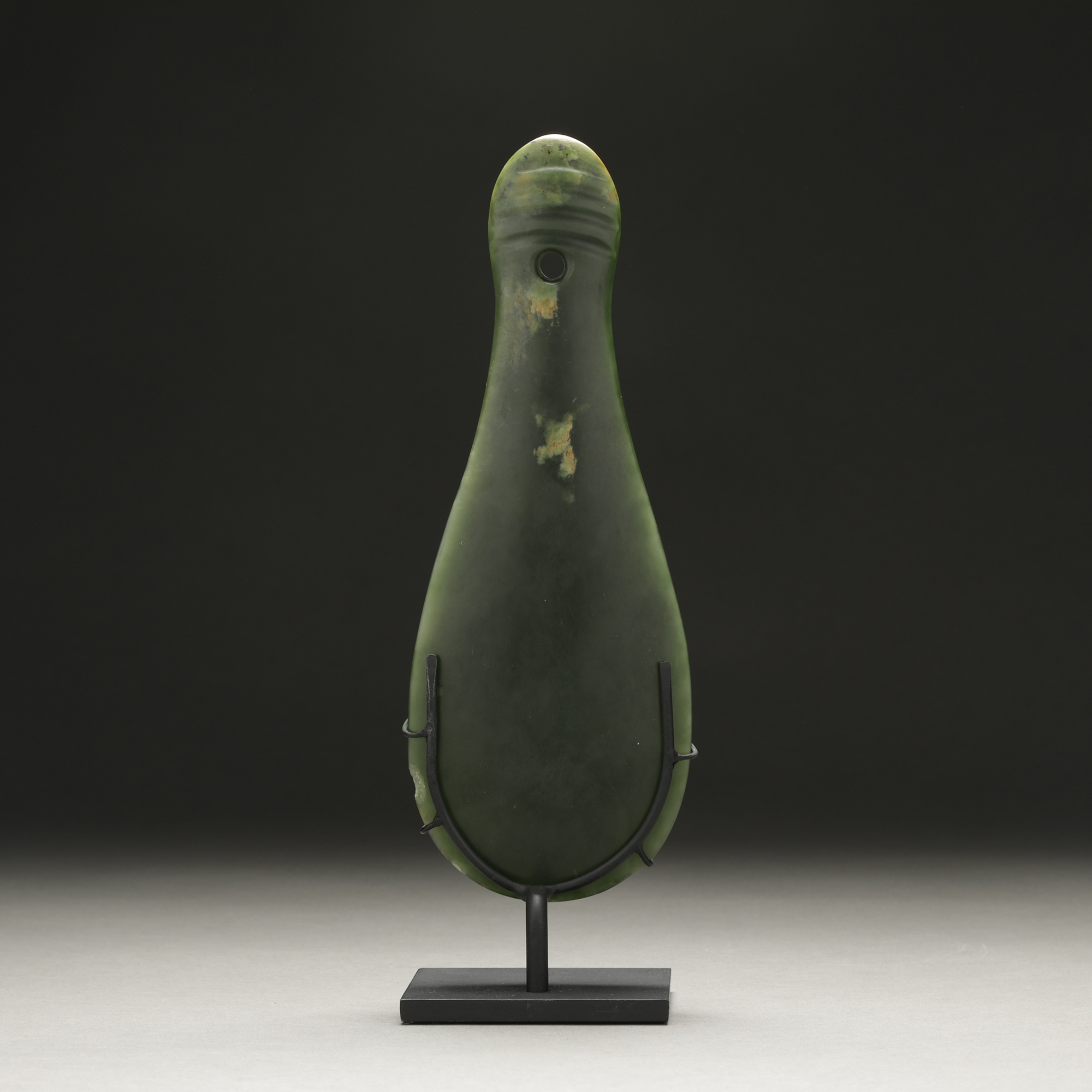
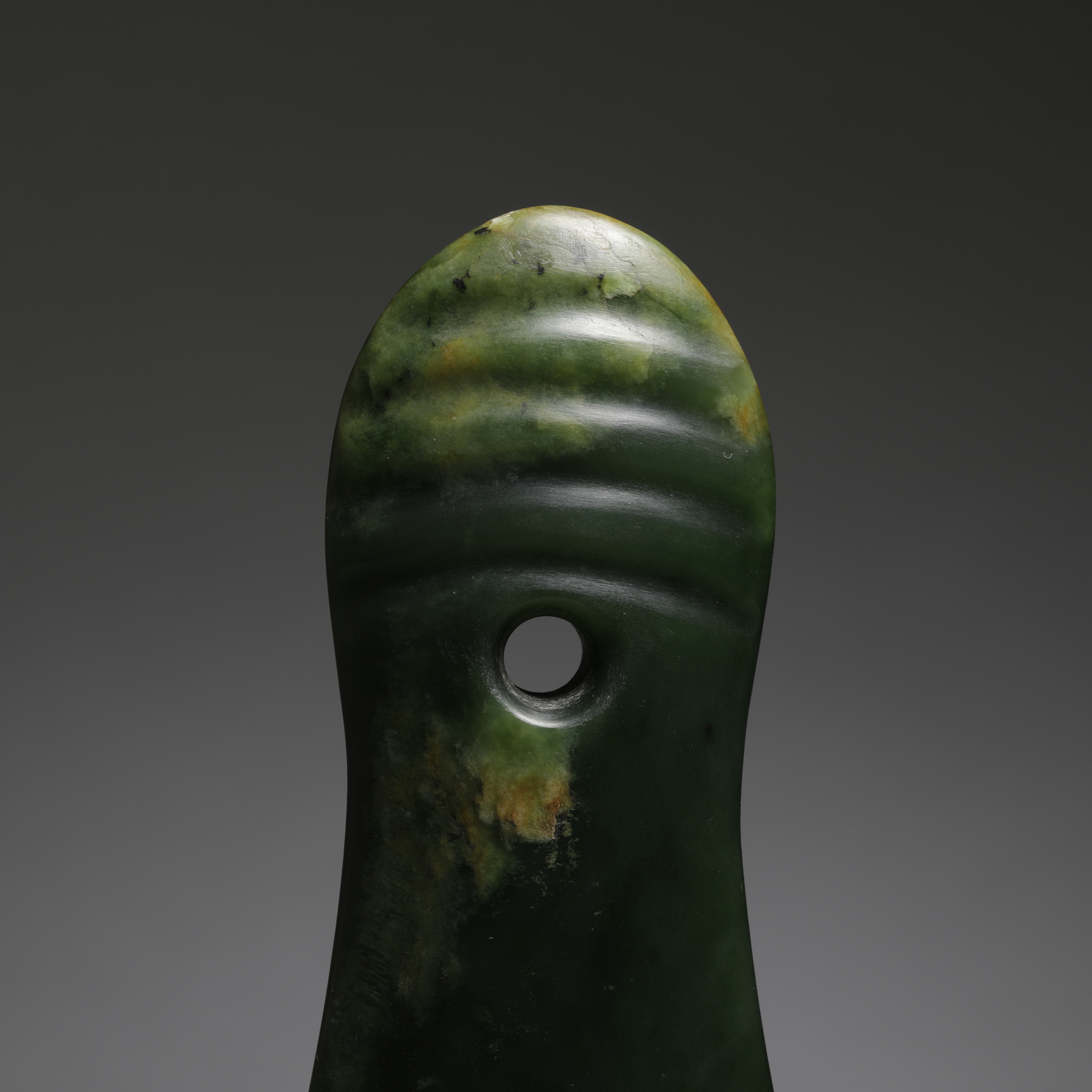
This beautiful example features a smooth, polished surface thinned to a broad and keen blade, with a suspension hole at the grip end that allows it to be secured by a wrist cord. Three grooves are carved in shallow relief on both sides of the grip to assist a firm hold. The stone is of the kawakawa variety, exhibiting a bright green hue with natural mottling of yellow and ochre-colored marsden inclusions, indicative of authentic South Island pounamu sourced from riverbeds and sacred sites.
Fine pounamu weapons were often bestowed upon rangatira (chiefs) and warriors, and were carefully passed down through generations as taonga tuku iho, ancestral treasures of immense cultural and historical value. This example is of slightly smaller dimensions and was most likely carved for a chieftainess or highborn wahine toa (female warrior).
Private Northeast Collection, USA