PUNUK CULTURE, ST LAWRENCE ISLAND
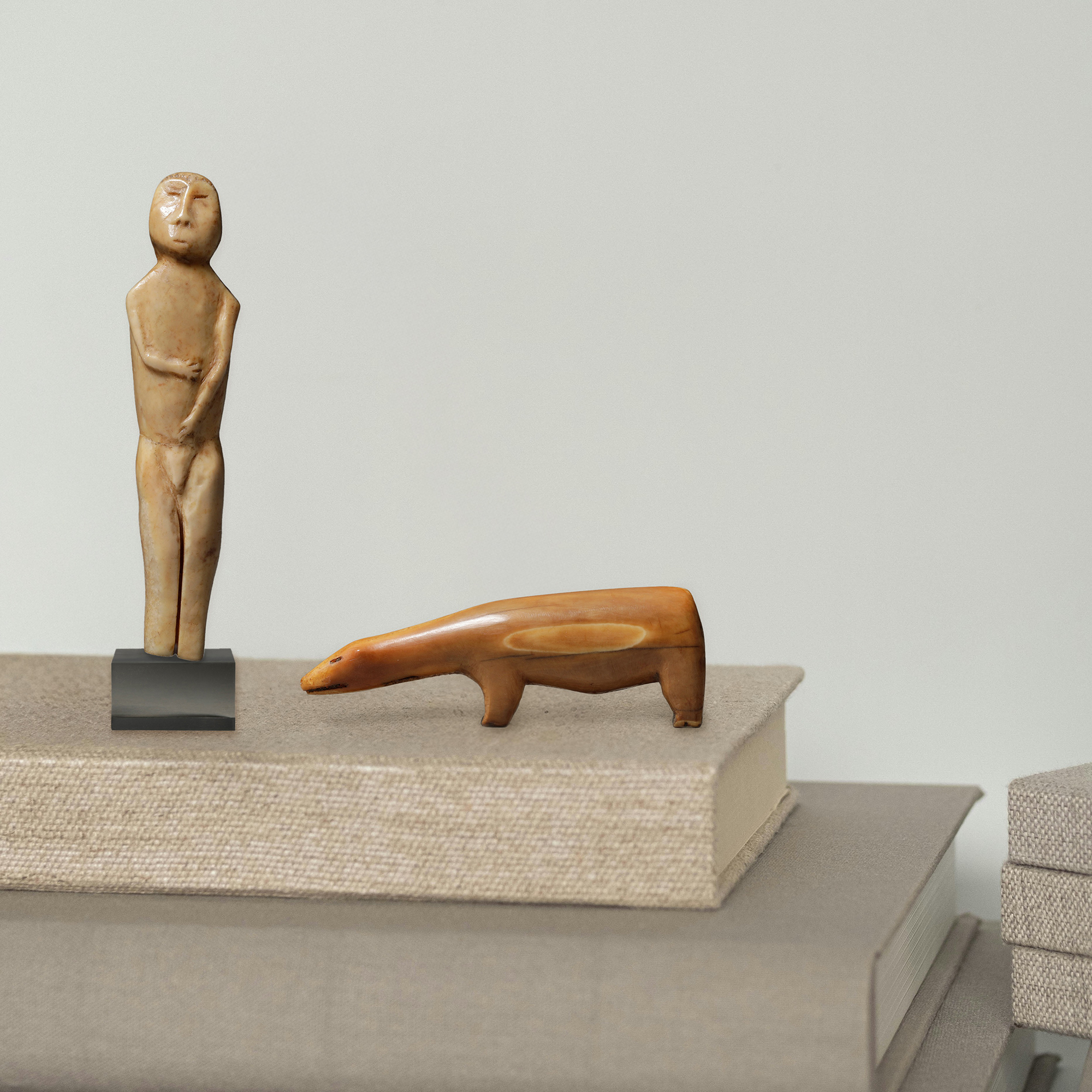
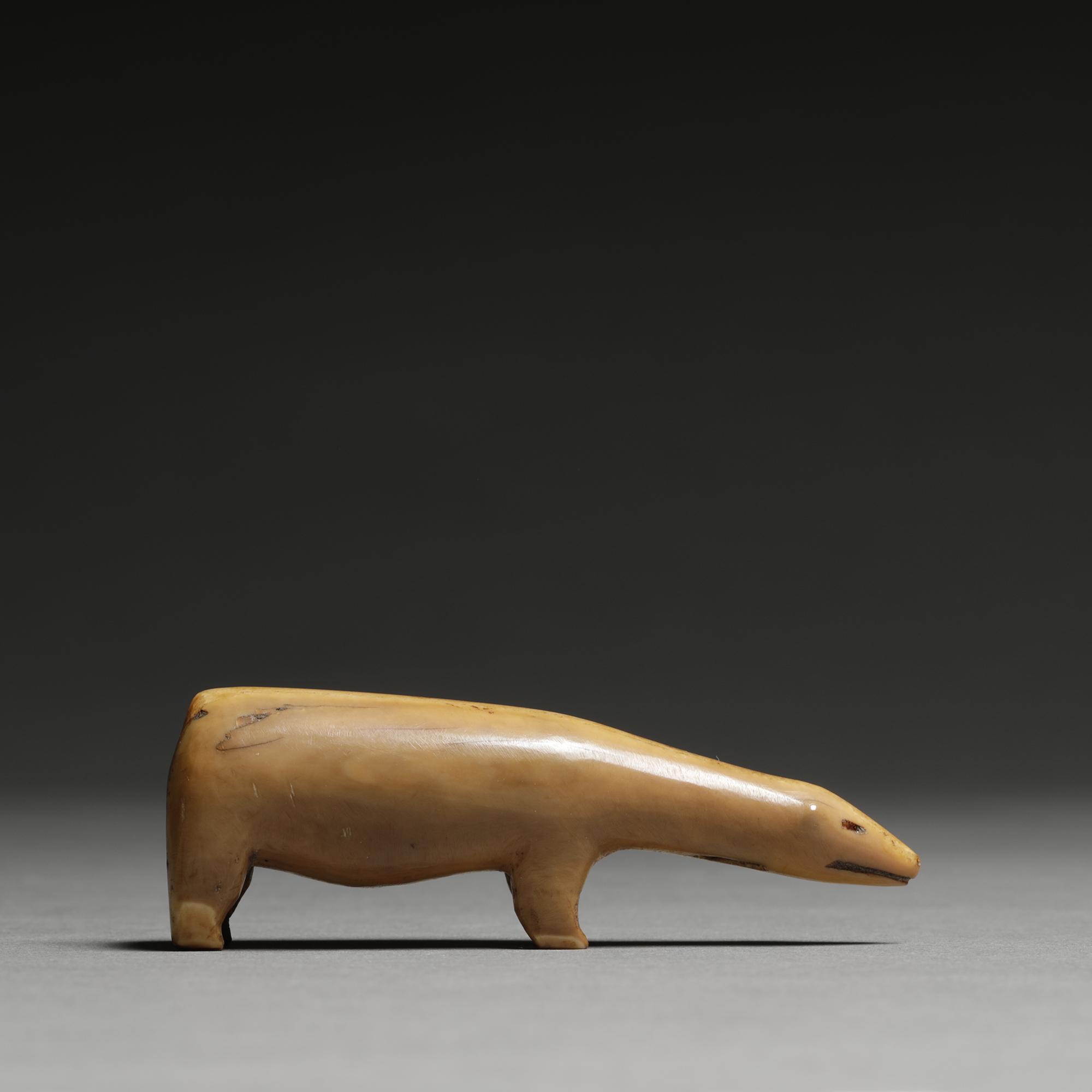
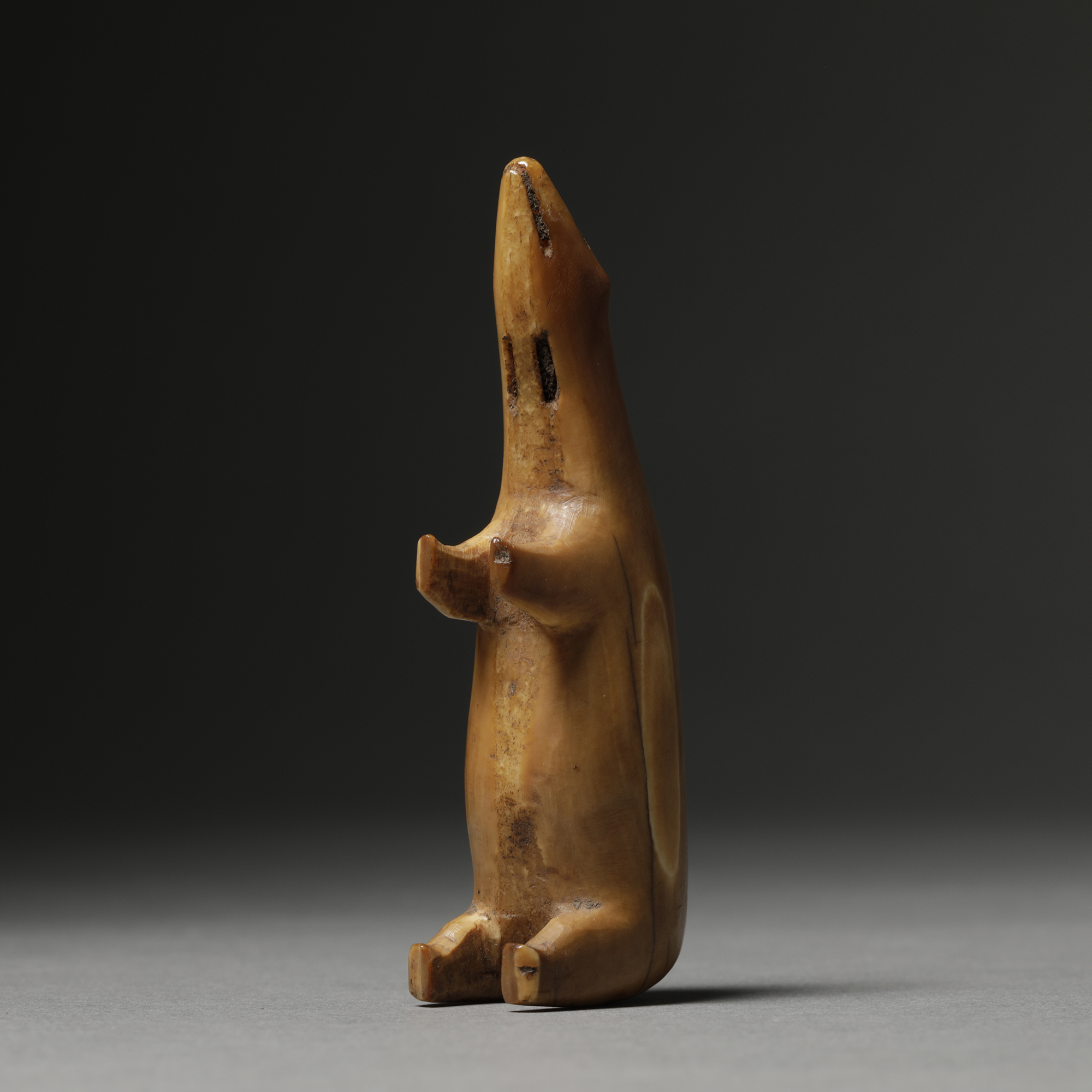
This diminutive amulet, expertly carved from creamy walrus ivory, depicts a stylized polar bear in profile. Despite its small scale, the carving reveals refined craftsmanship: the stout legs, trunk, and powerful haunches are sharply delineated with sensitive contouring and a keen playfulness with proportion. The bear’s head is abstract but purposeful, features sketched in only a few lines, and pierced at the base for suspension or attachment. The surface is smoothly polished, bearing a soft patina from handling and age. It was likely worn on the body or sewn into clothing.
In Thule culture, amulets like this were more than decorative, they were spiritual tools and protective charms. Commonly made of ivory, bone, or antler, amulets were carved into the forms of animals, humans, or hybrid beings, each imbued with symbolic meaning. They were worn or carried to ensure success in hunting, protect against harm or misfortune, or connect with spirit animals or ancestral powers. Thule carving emphasized clean lines, compact form, and clarity of outline.
The Thule worldview was deeply animistic, regarding animals, humans, and natural phenomena as spiritually interconnected. Their art—especially small-scale carvings like this amulet—reflects this spiritual ecology, where every object had the potential to mediate between the human and non-human worlds. The polar bear in particular was revered as a symbol of strength, endurance, and dominance in the Arctic ecosystem. As apex predators, they were both feared and respected, and in some traditions, thought to possess human-like souls. A polar bear amulet could have served as a spiritual intermediary, granting the wearer attributes of the animal or invoking its favor.
Nina Newhall, St. Lawrence Island