AGWE DYNASTY, ETHIOPIA
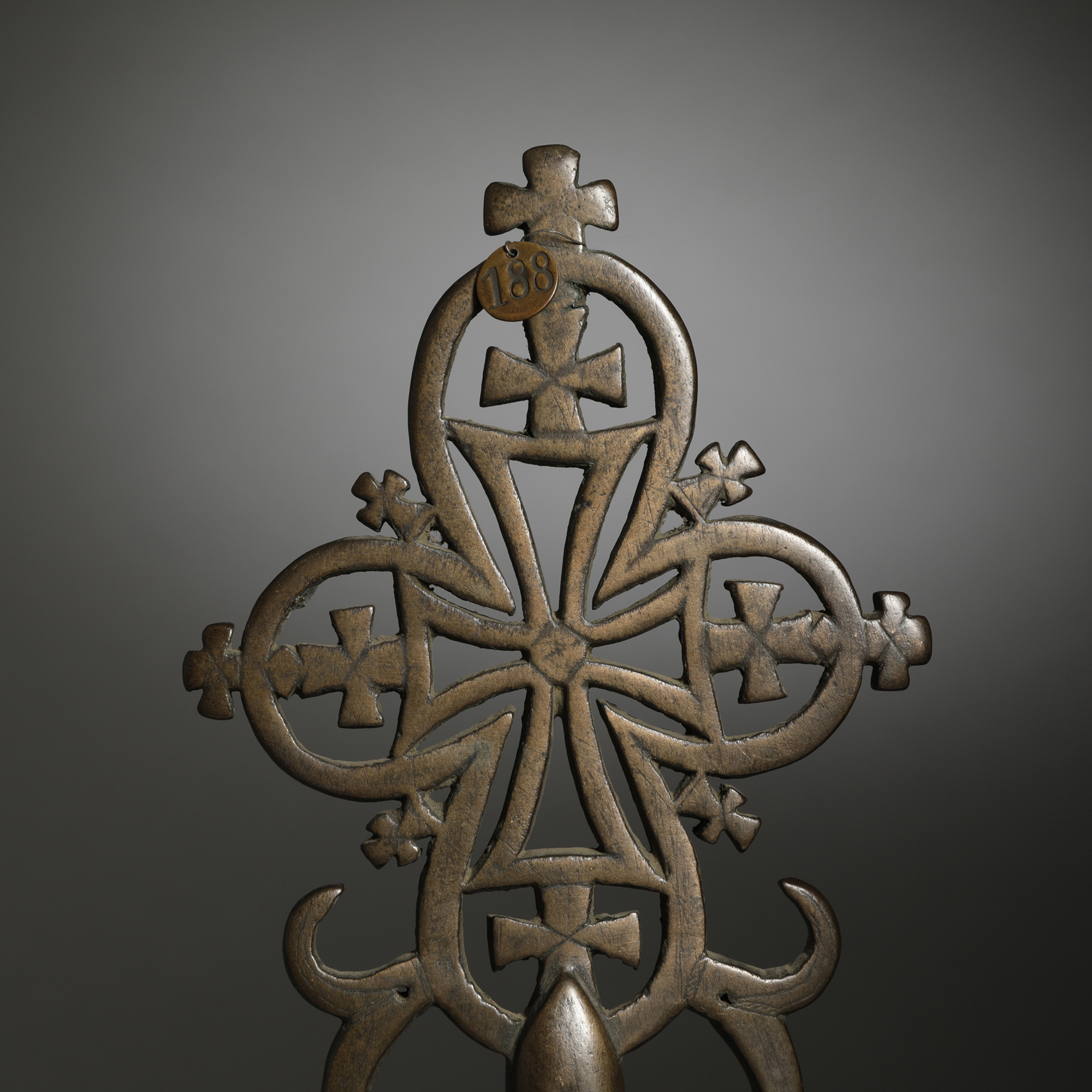
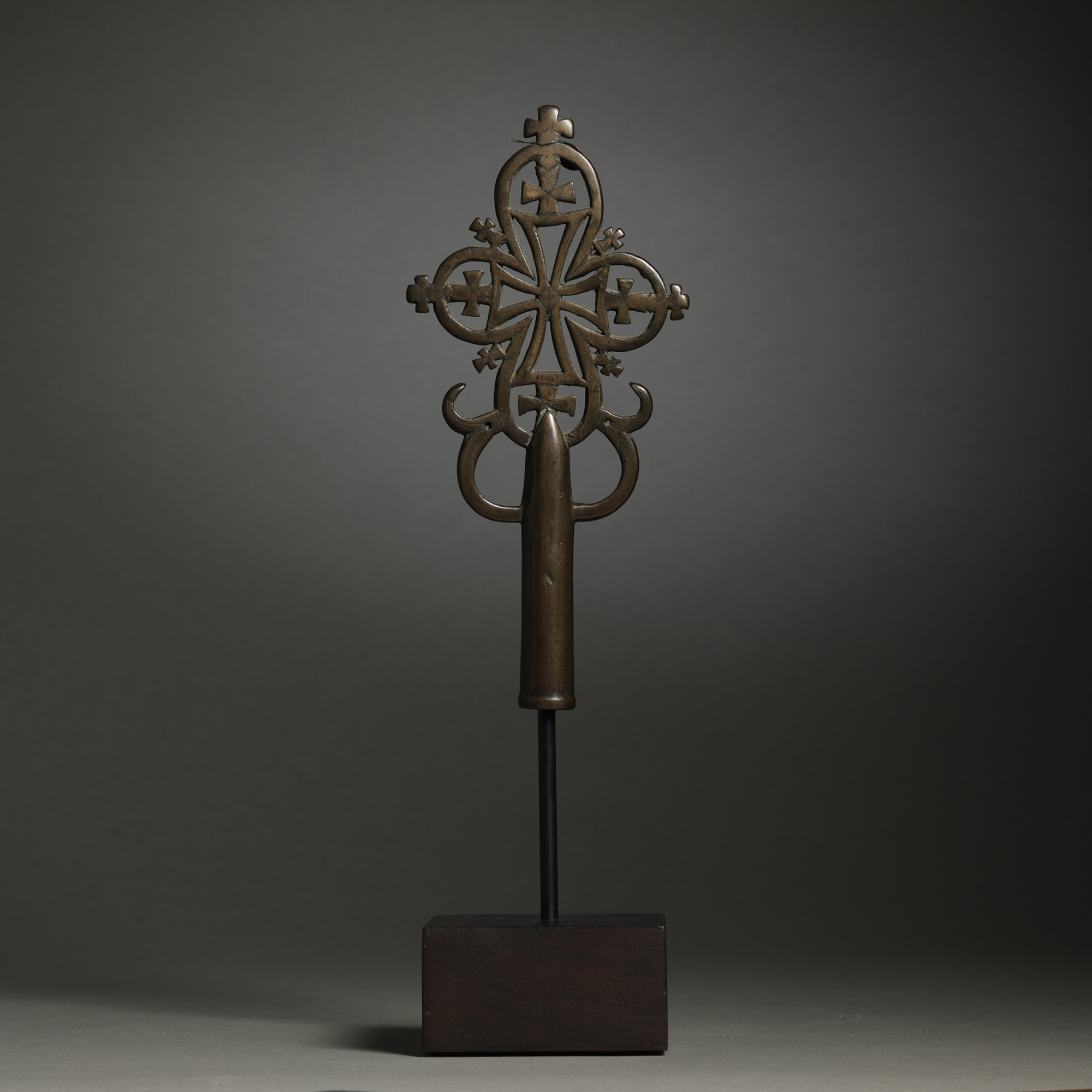
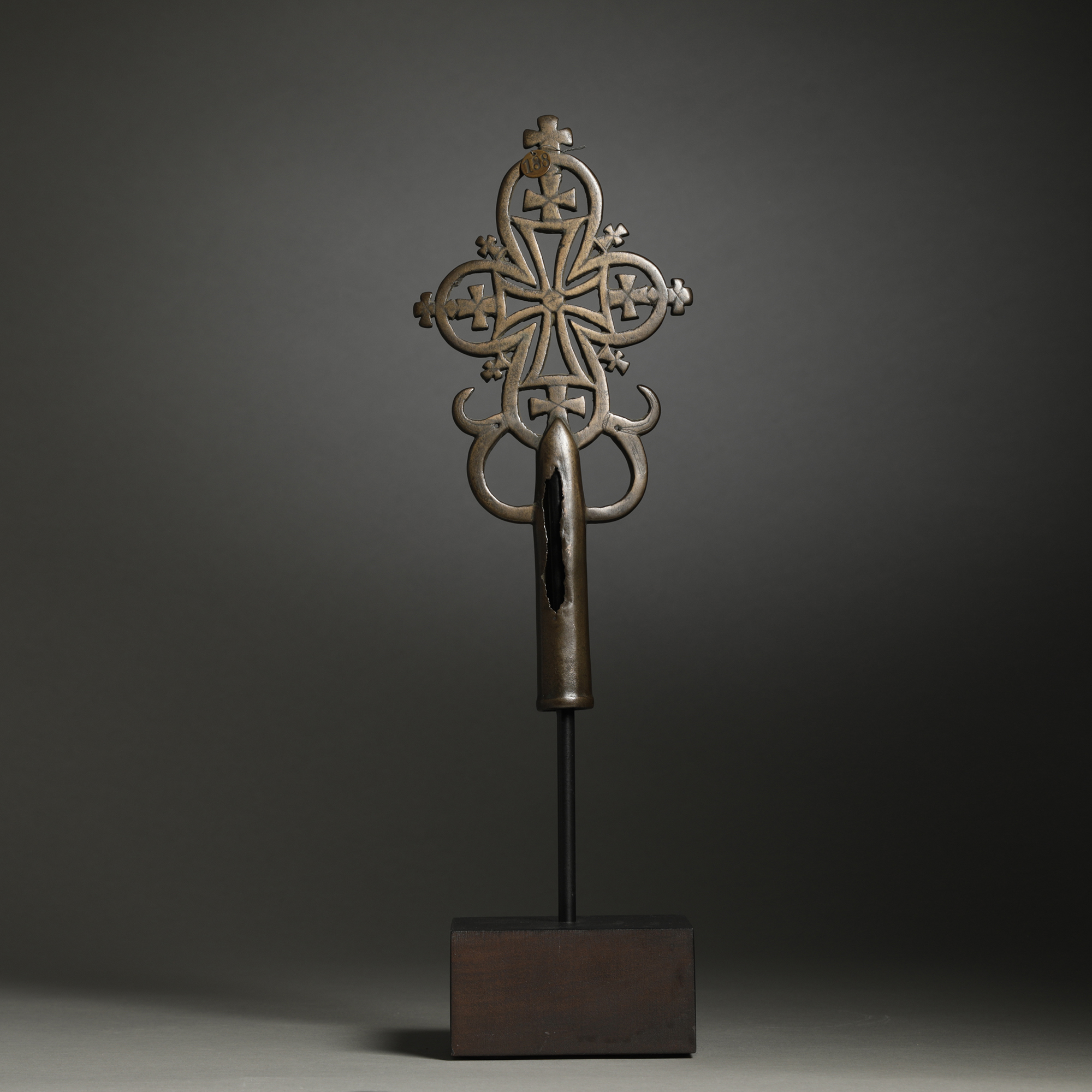
This exquisite processional cross is a superb example of the liturgical metalwork produced in Christian Ethiopia during the later Zagwe or early Solomonic period. Cast in high-quality bronze using the lost-wax method, the cross displays a characteristic openwork design. Its expanding and nested cross motifs combine in a kaleidoscopic vision symbolizing the Tree of Life, the Four Gospels, divine light, and the eternal.
The Zagwe dynasty was a medieval Agaw monarchy that once ruled the northern parts of Ethiopia and Eritrea. They were remembered most for King Gebre Meskel Lalibela, who is credited with having ordered the construction of the rock-hewn, monolithic Christian churches of Lalibela.
Here we find the distinctive style associated with the Zagwe tradition: symmetry, intricate patterning, and a harmonious blend of abstraction and sacred symbolism. Its finely balanced proportions and crisp casting suggest the hand of a skilled artisan, likely commissioned by a monastic or royal patron. Processional crosses were mounted on staffs and used in liturgical ceremonies and religious processions, signifying the presence and authority of the Church. The subtle wear from handling and devotional use attests to its active role in ecclesiastical life over centuries.
A remarkable testament to Ethiopia's enduring Christian heritage, this cross not only embodies spiritual significance but also stands as a masterpiece of medieval African metalwork. An old metal collection tag is still affixed with collection number 188 from the Mission Inn Collection. Ethiopian crosses with early provenance are extremely rare and are highly desired by museums and collectors alike.
Frank Augustus Miller (1858 – 1935)
Mission Inn Collection, California. The Mission Inn Hotel began as a quaint adobe boarding house in 1876, becoming a full-service hotel in the early 1900s. Opened by Frank Miller, it expanded in 1903 with over 200 guestrooms and the addition of the Mission Wing, built in Mission-Revival style while incorporating architectural features from more than 20 different California missions. Three more wings materialized as demand grew, including the Cloister, Spanish Wing and the Rotunda Wing, completed in 1931. Miller filled the hotel with valuable items from across the globe, including artwork, furniture and religious relics. Mission Inn still houses the oldest bell in Christendom, dating back to 1247.