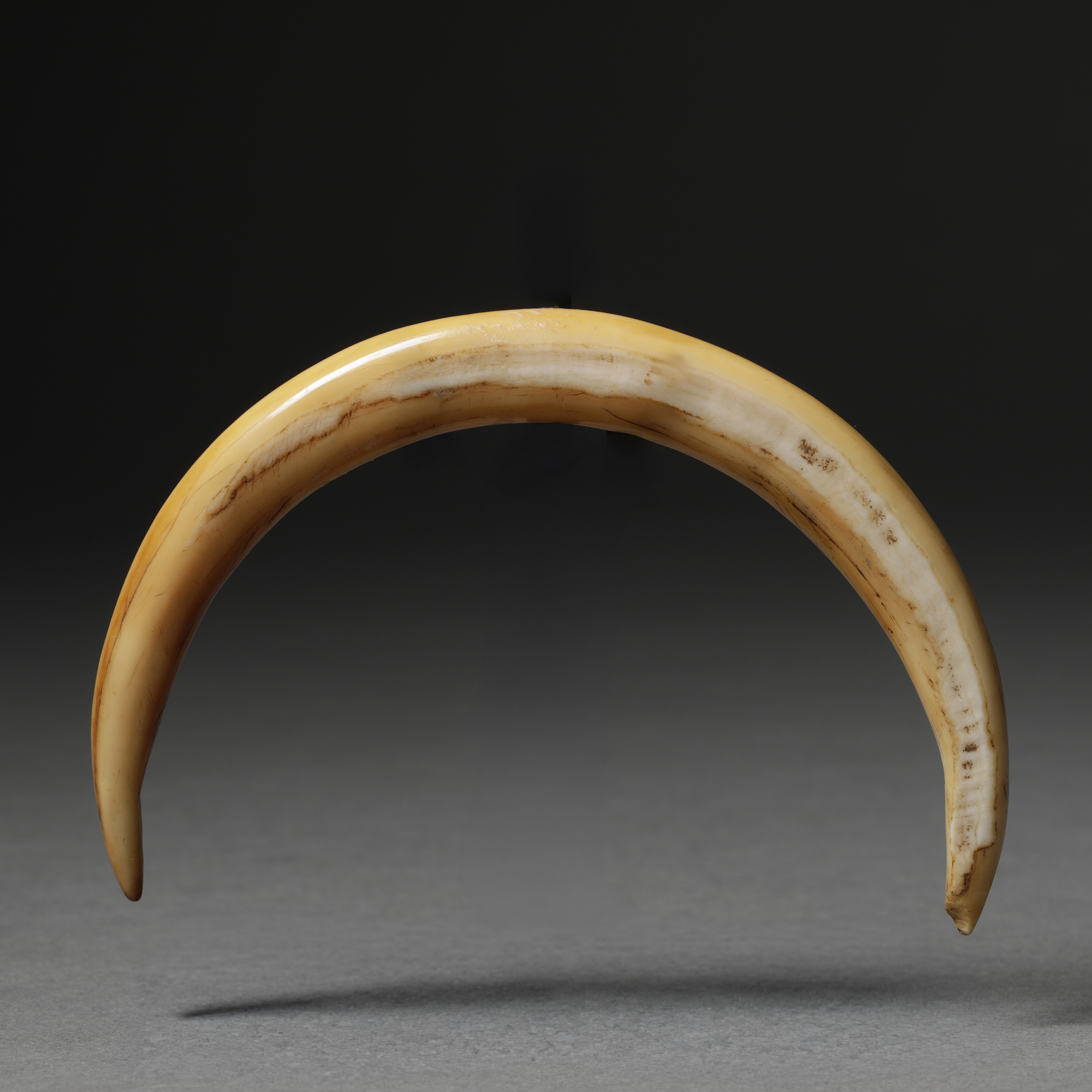
PAPUA NEW GUINEA
In New Guinea, septum rings were worn for much more than decoration. Depending on the cultural group, they could communicate a man's social standing, mark his transition into adulthood, or symbolize hunting and warrior achievements.
Among the Asmat people of southwestern New Guinea, the bipane was a distinctive ornament associated with social standing and respect within the community. Its materials and craftsmanship could contribute to its significance. Museum documentation connects the ornament with successful hunting; in some historical Asmat contexts, it also signified achievement in warfare and headhunting.
In several New Guinea communities, septum piercing and wearing particular ornaments were associated with initiation rites. These practices could mark a young man's passage into adult social responsibilities and recognition.
Collected in New Guinea in the 1930’s by a missionary, and thence by descent