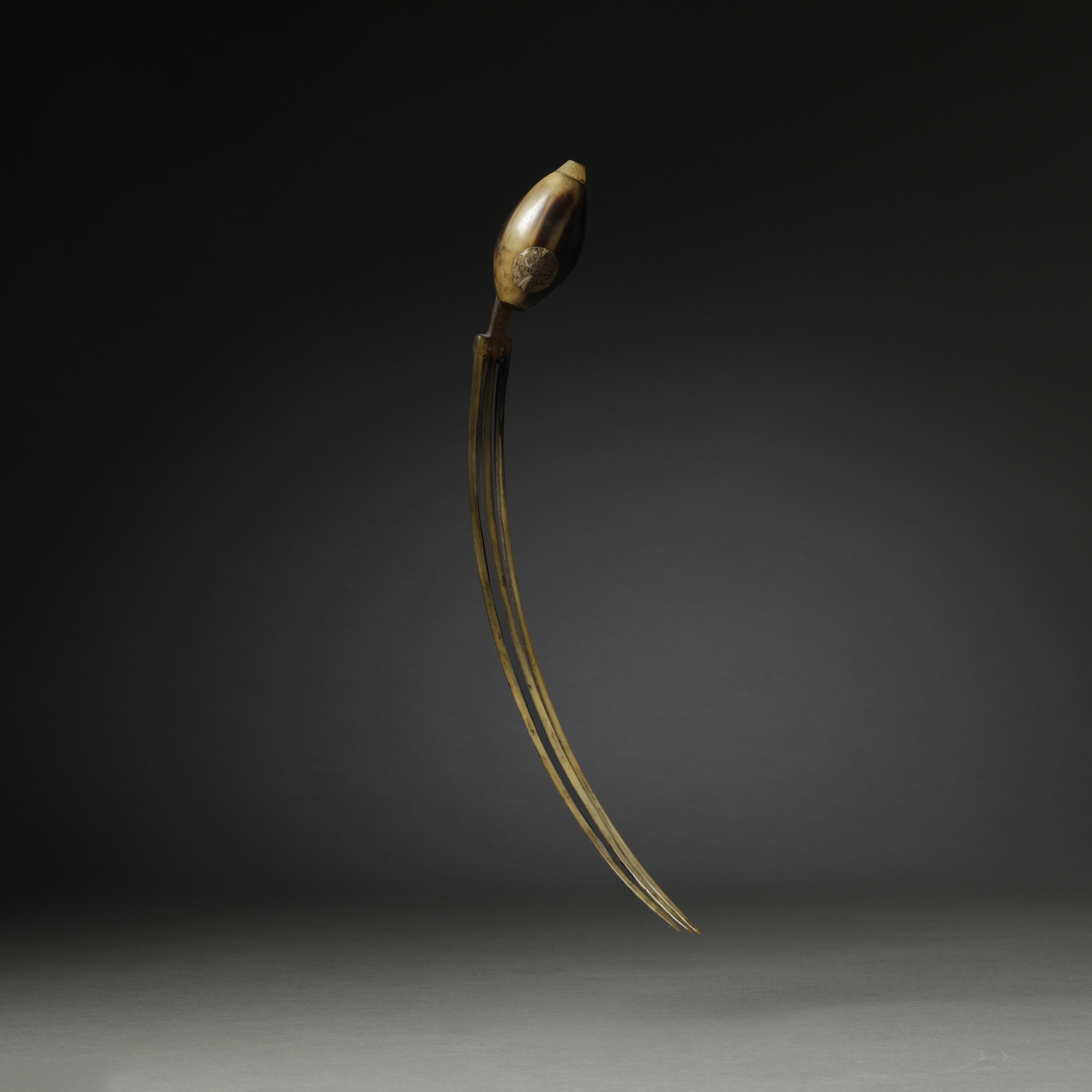
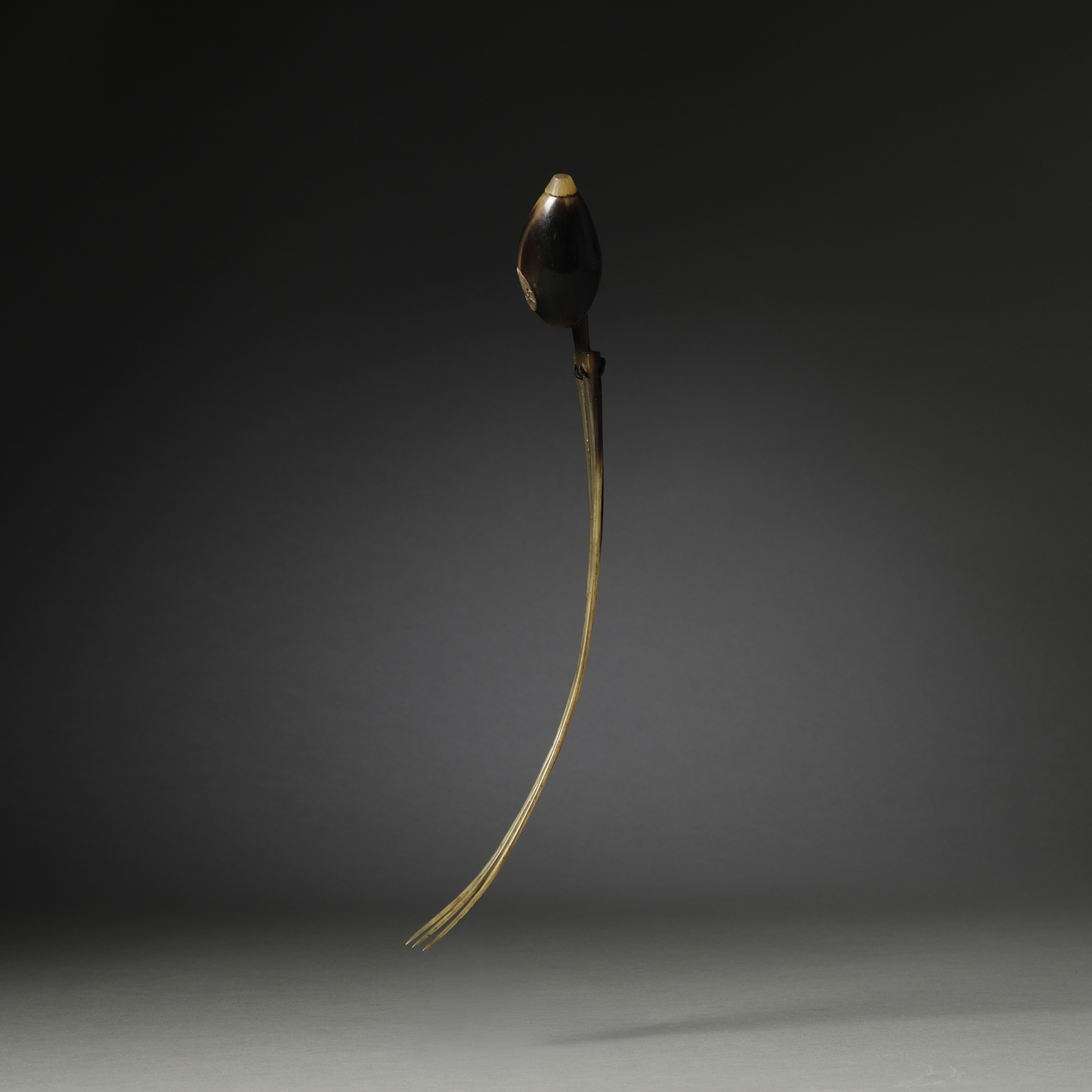
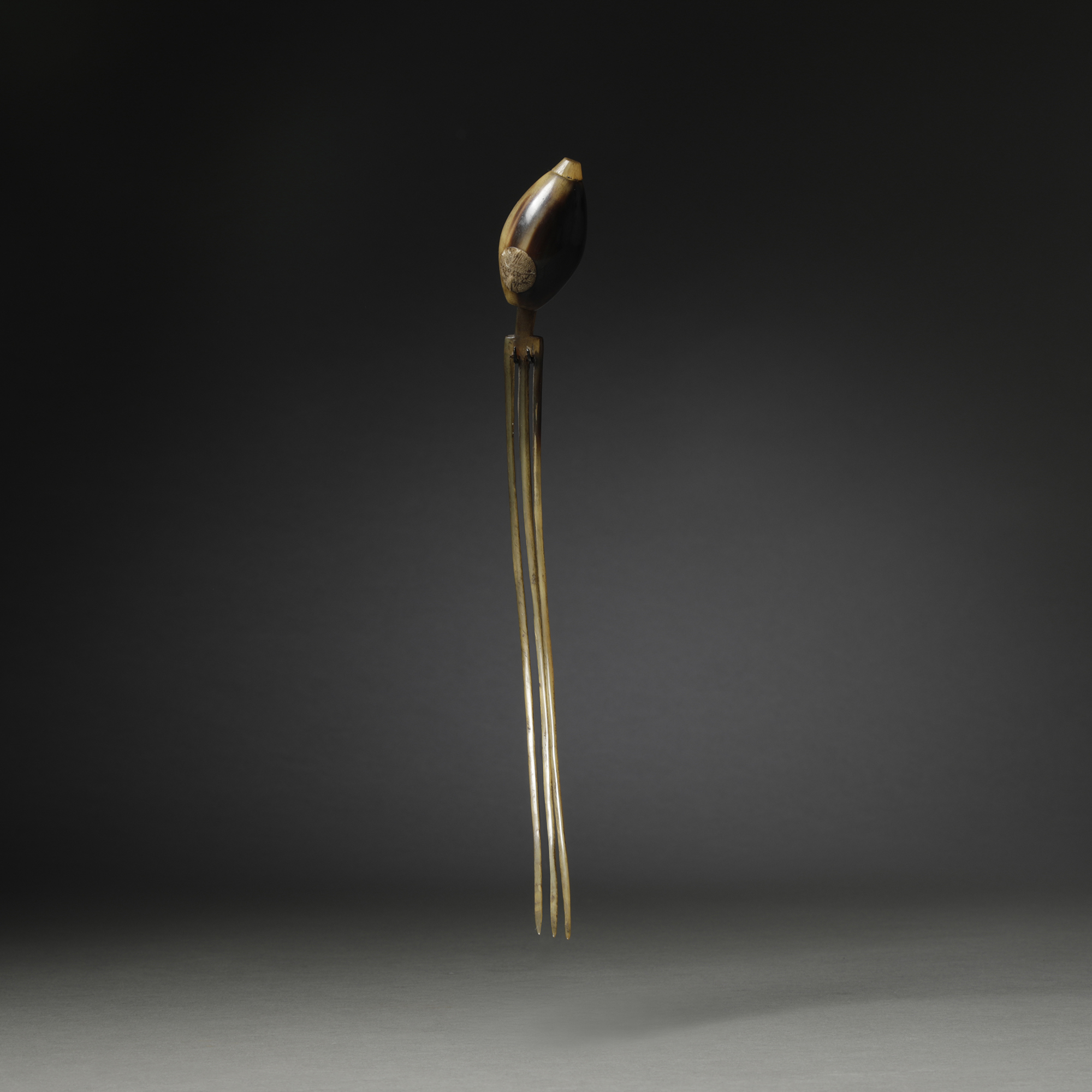
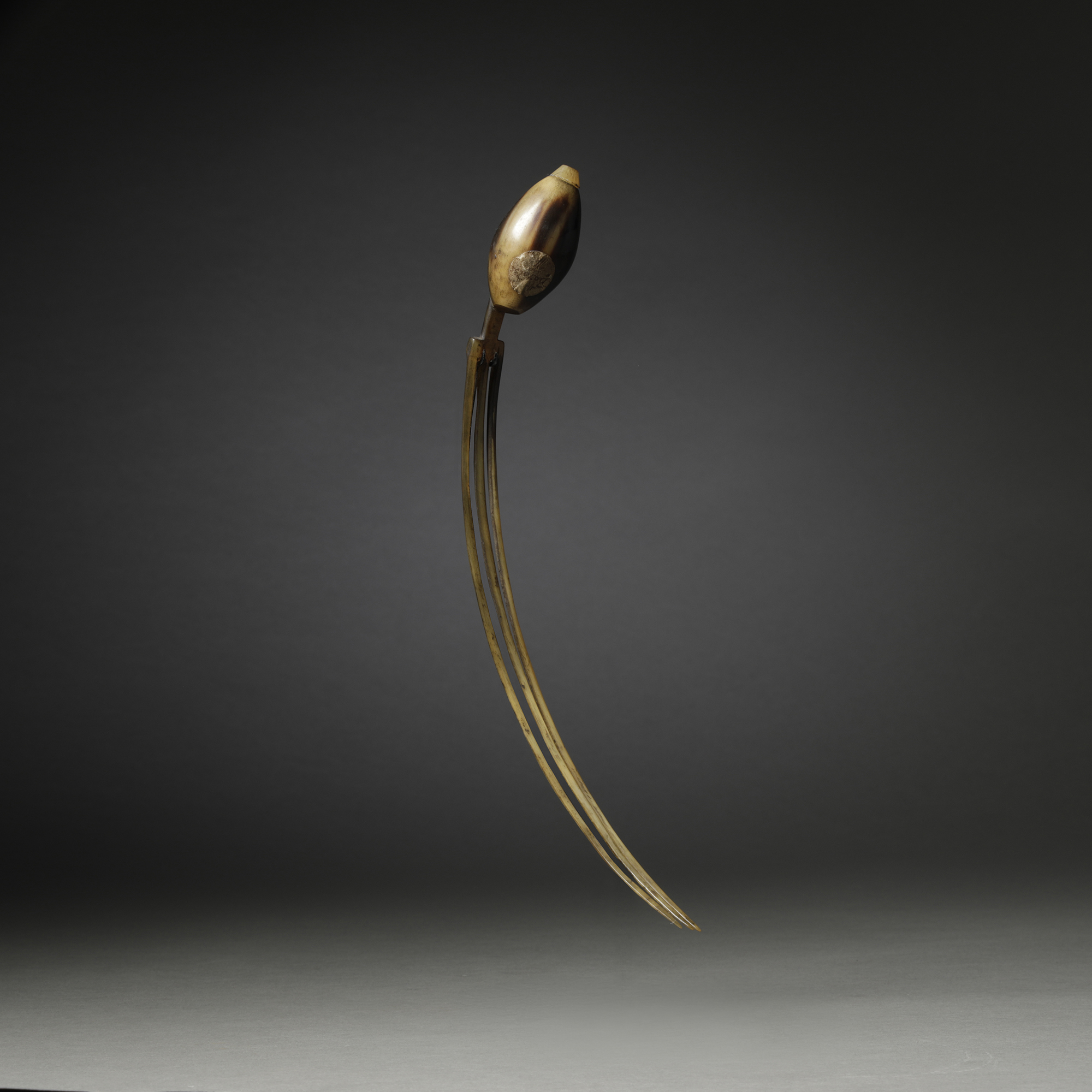
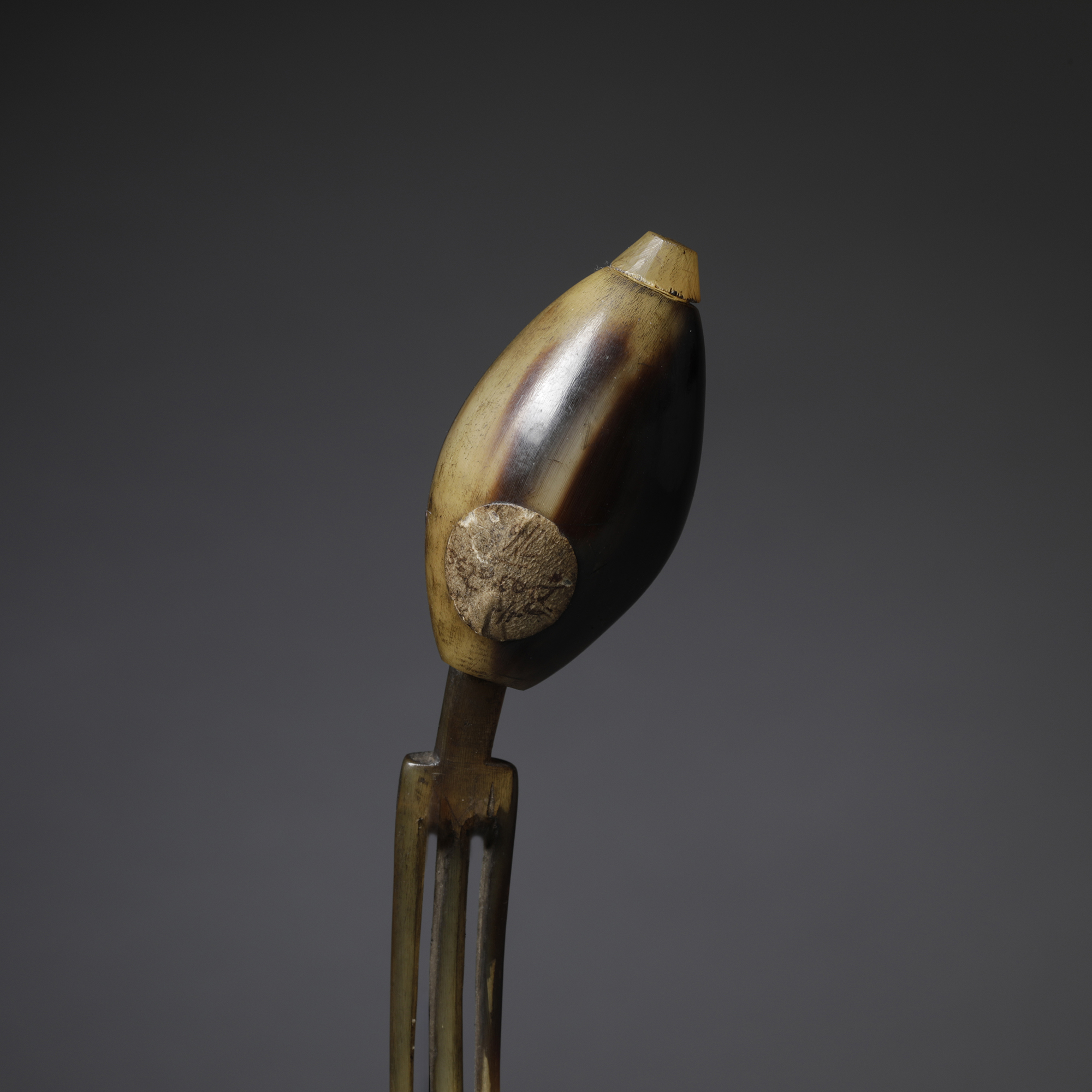
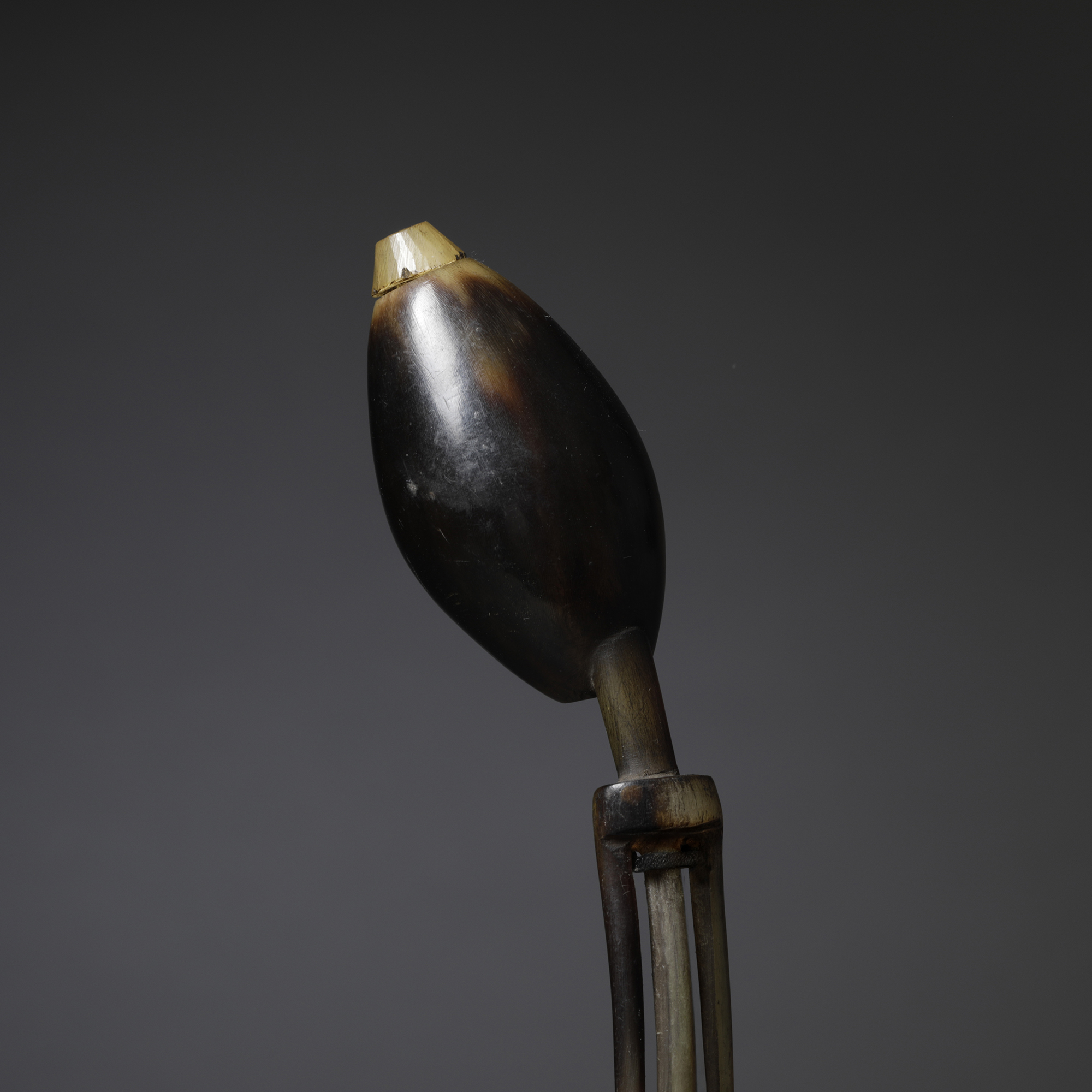
An exceptionally elegant snuff bottle carved from horn, distinguished by its elongated, three-tined extension and subtly anthropomorphic character. The gently swelling, ovoid receptacle, fitted with a small stopper, rises above three slender, tapering prongs that sweep downward in a graceful arc. Originally worn in the hair, the object served simultaneously as a practical container for powdered tobacco and an arresting form of personal adornment.
The bottle possesses a remarkable sculptural presence. Its rounded upper chamber suggests a human head, while the narrow connecting neck and attenuated prongs evoke an elongated torso and limbs. This anthropomorphic quality is achieved without explicit figurative carving, emerging instead from the object's carefully balanced proportions and fluid, organic silhouette. The richly variegated horn, ranging from warm amber to deep brown and almost black, further accentuates its sculptural character.
The small round bodies of the finials with their elongated ‘tails’ bring to mind the long-tailed whydah bird hovering over the grasslands. It is found in many parts of the southern sub-continent including Lesotho and South Africa, its feathers used to create the headdresses for warriors in the Natal Colony and possibly further afield.
Snuff-taking was an important social practice throughout southern Africa, and the containers used to hold powdered tobacco were frequently objects of considerable artistic refinement. Related horn snuff containers and ear ornaments are preserved in the British Museum, including nineteenth-century examples associated with the Zulu and neighboring peoples. Particularly relevant is a snuff container recorded from KwaZulu-Natal in 1897 that the museum also classifies as an ear ornament.
With its extraordinary economy of form, sinuous movement, and almost surreal suggestion of the human figure, this bottle transcends its utilitarian purpose to stand as a compelling example of southern African sculptural ingenuity.
In fine condition. A handwritten label accompanying the object identifies it as “Barotse,” suggesting an attribution to the Lozi (Barotse) people of the upper Zambezi region in present-day western Zambia, although the precise origin of the piece remains unconfirmed.
Private Collection, UK