SONGYE, DRC
Some cultures in the Congo Basin use the term nkisi or nkishi (pl. minkisi) to refer to spirits or objects that a spirit inhabits. It is a name most commonly associated with power figures, a major class of carvings that were used to counteract malicious sorcery and support abundance and well-being. Minkisi were created jointly by a specialist carver, who shaped the figure’s form, and a ritual practitioner (nganga), who would empower and activate the figure with a magical charge of organic ingredients. The latter was either inserted into a cavity or attached to the body.
Europeans may have first encountered these objects during expeditions in the region as early as the fifteenth century. In the late 1800s, Christian missionaries who had come among the Songye and Kongo peoples confiscated and destroyed such “fetish” objects, as they were often called, demonizing them as tools of witchcraft and heathenism. Despite their efforts to eradicate these works, many minkisi survived and passed into collections to be appreciated and studied by future generations.
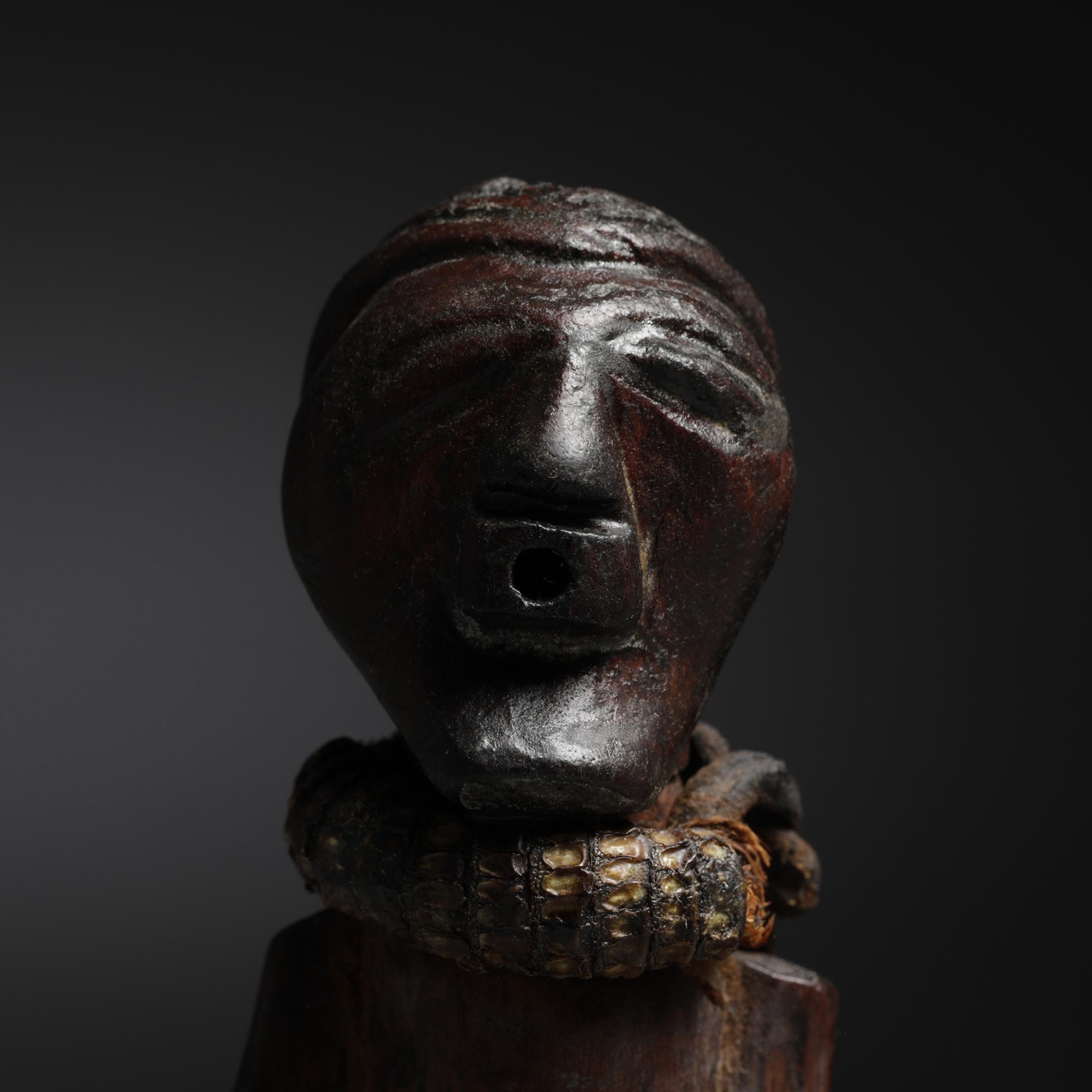
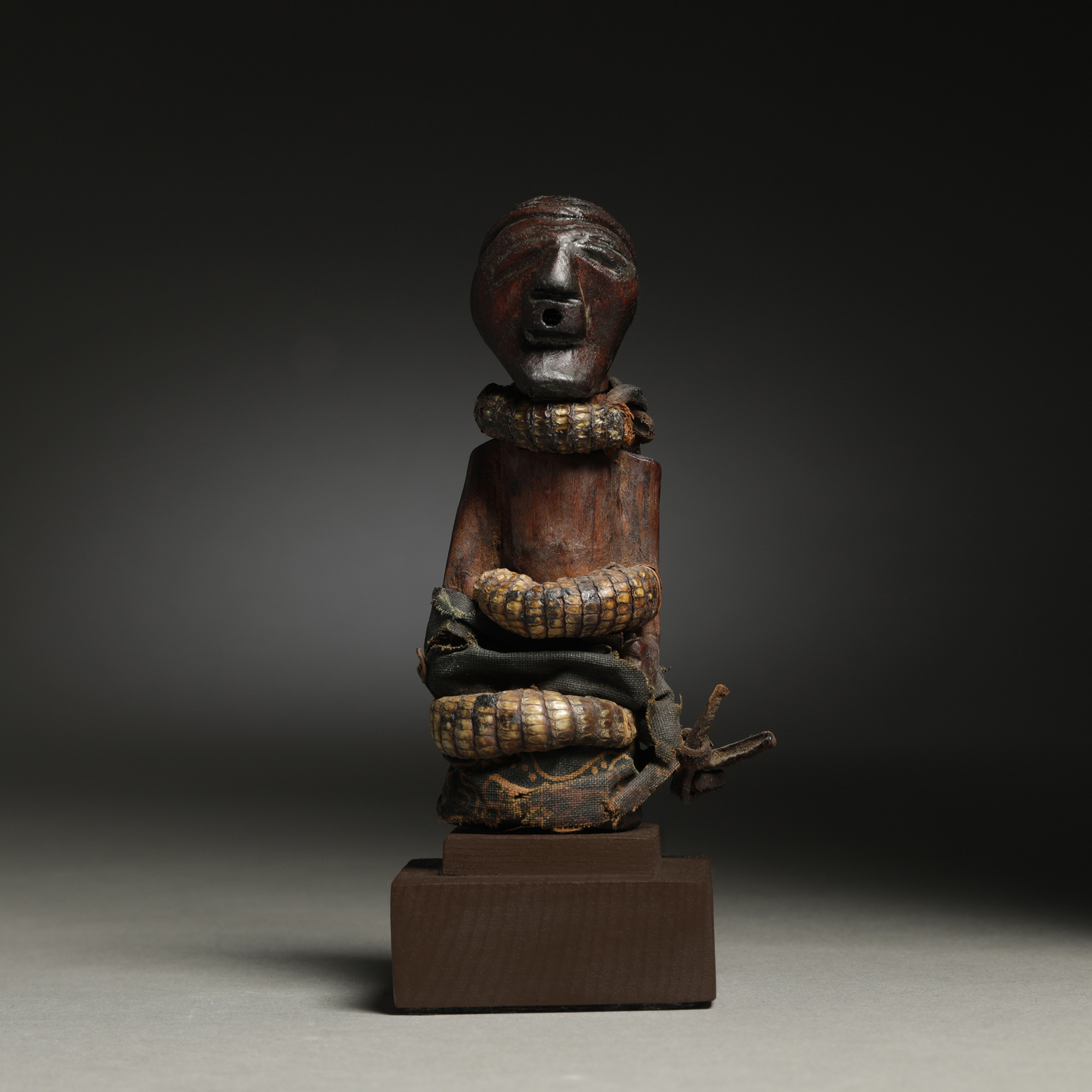
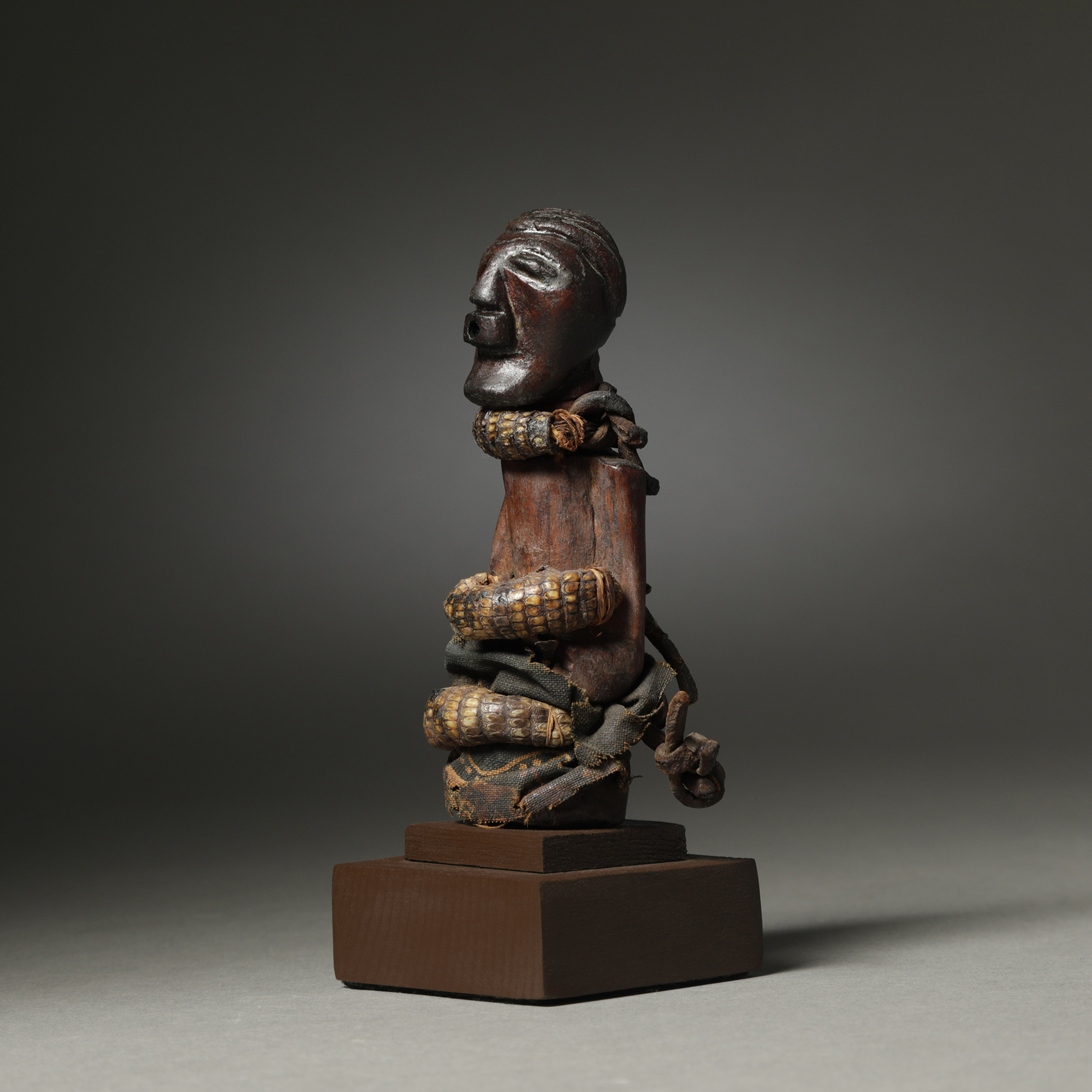
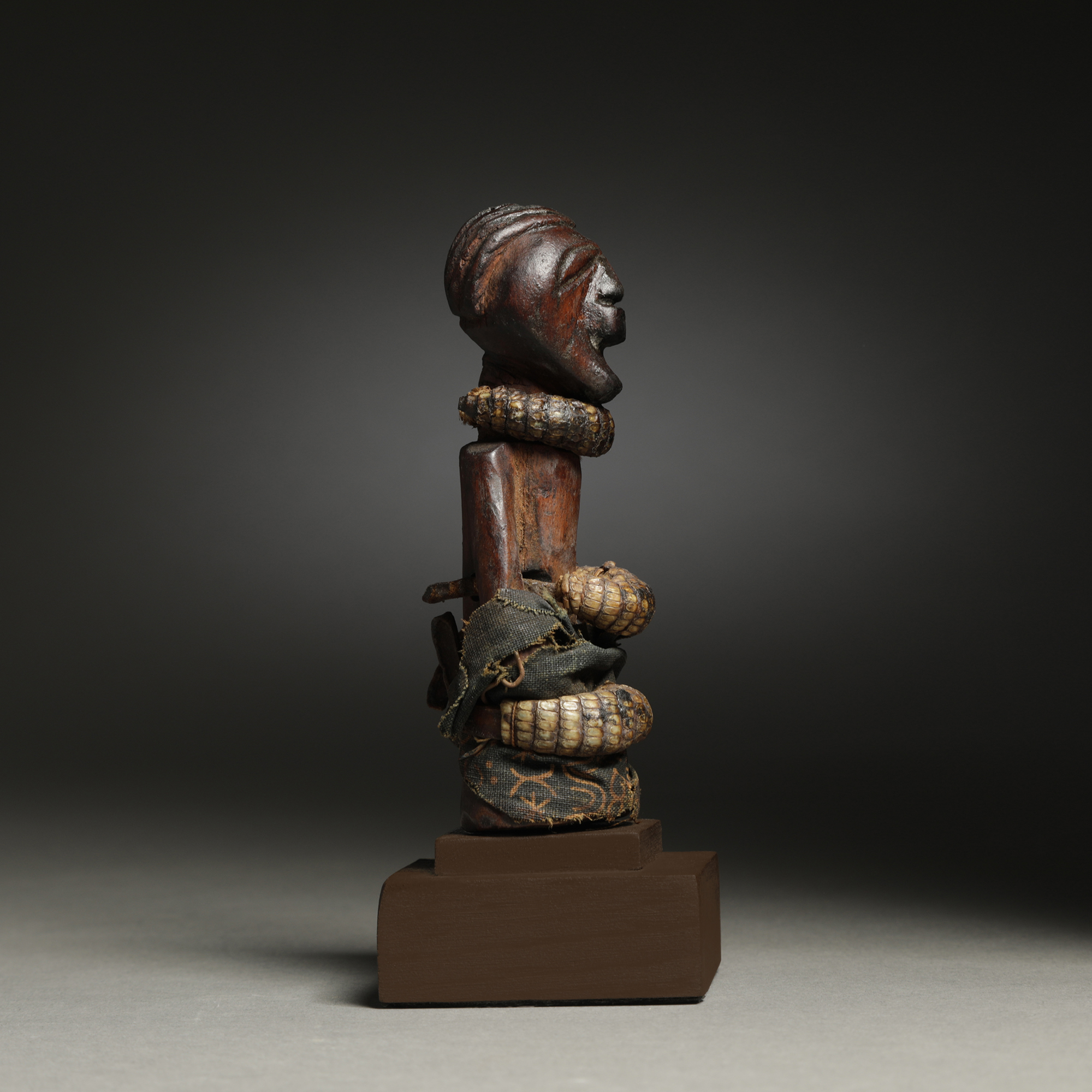
The immediate focal point of this figure is its classic Songye face, darkened by a resinous patina and communicating a marked strength and depth of feeling. Simply but expressively carved, its geometric features and curved profile – into which eyes, coiffure, and chin are all drawn – evoke a transcendent solemnity. A schematic body is decorated and partially obscured by attached coverings of cloth and bundles of reptile skin.
Affrika Gallery, Washington, D.C
Craig DeLora, New Jersey