SONGYE, D.R.C.
This power figure (nkisi, pl. mankishi) is attributable to Songye artistic and ritual traditions of the central Democratic Republic of the Congo, and was produced under the direction of an nganga, or ritual specialist. Unlike large-scale or publicly activated mankishi intended for communal protection or judicial functions, this example was created for the exclusive use of a single individual, tailored to that person’s specific circumstances, vulnerabilities, and social obligations.
Within Songye belief systems, the nganga served as both diviner and mediator, determining the appropriate form, materials, and medicinal substances (bishimba) incorporated into the figure in accordance with the client’s personal needs. Such privately commissioned figures were understood to operate on an intimate scale, addressing matters such as personal protection, health, fertility, or conflict resolution, rather than the welfare of the broader community.
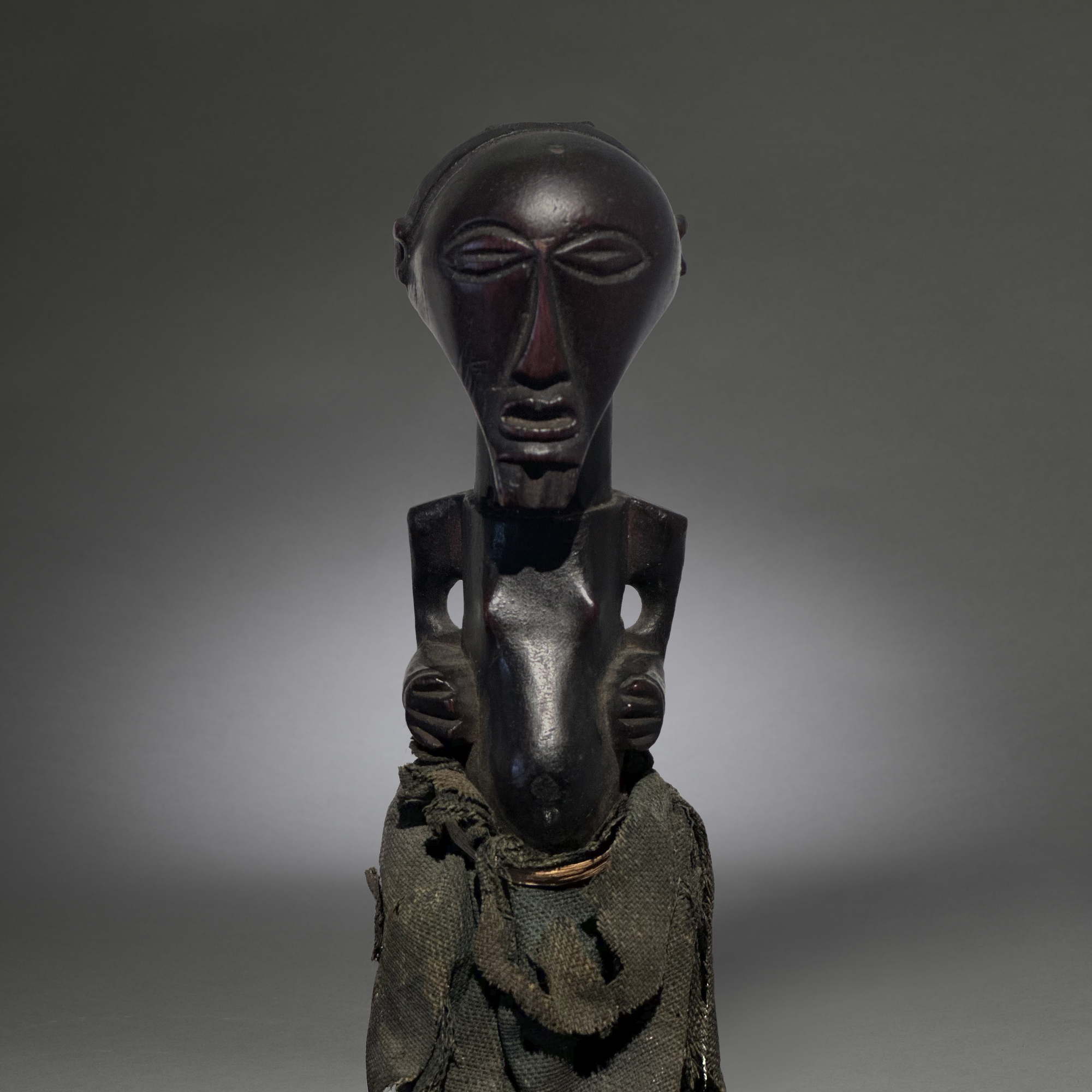
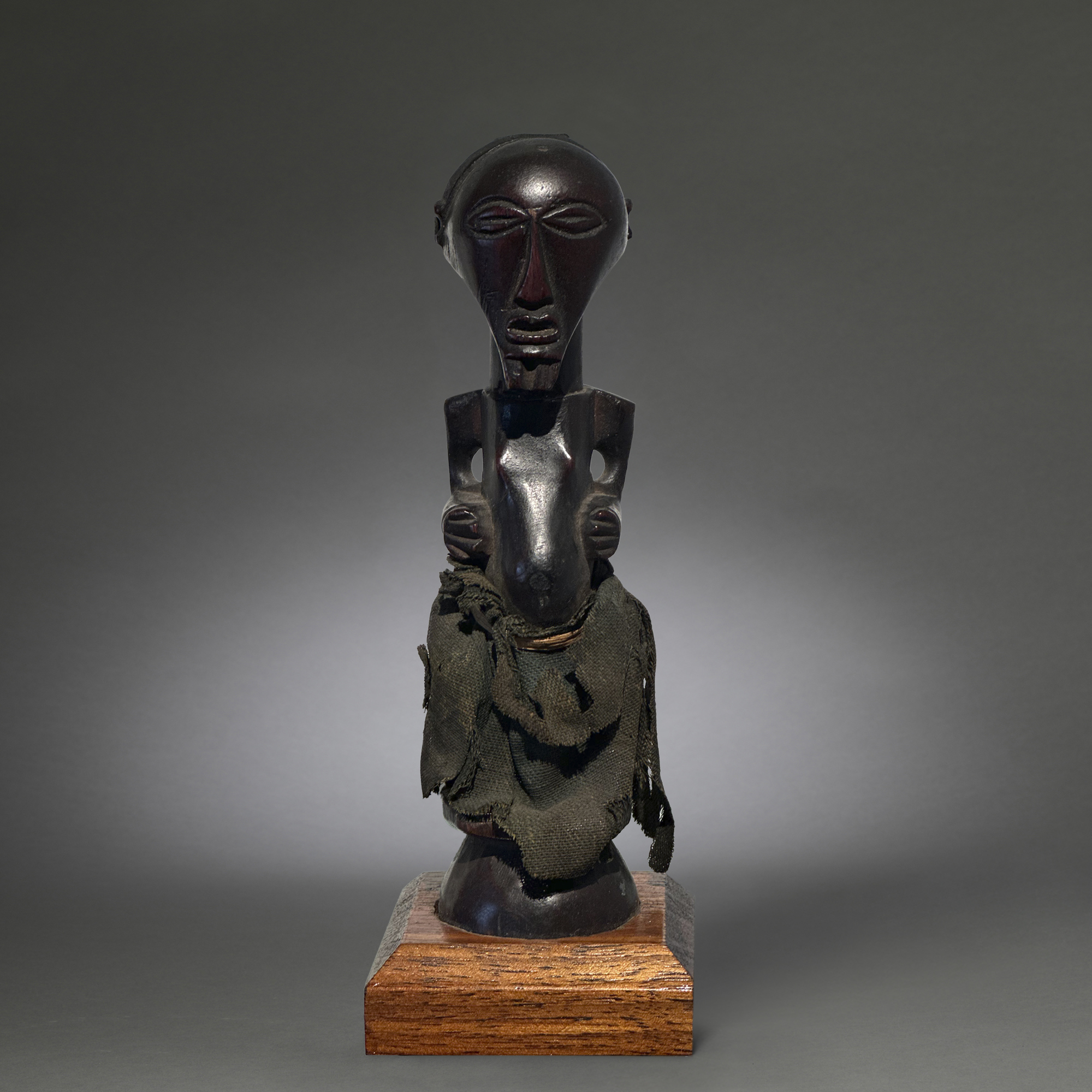
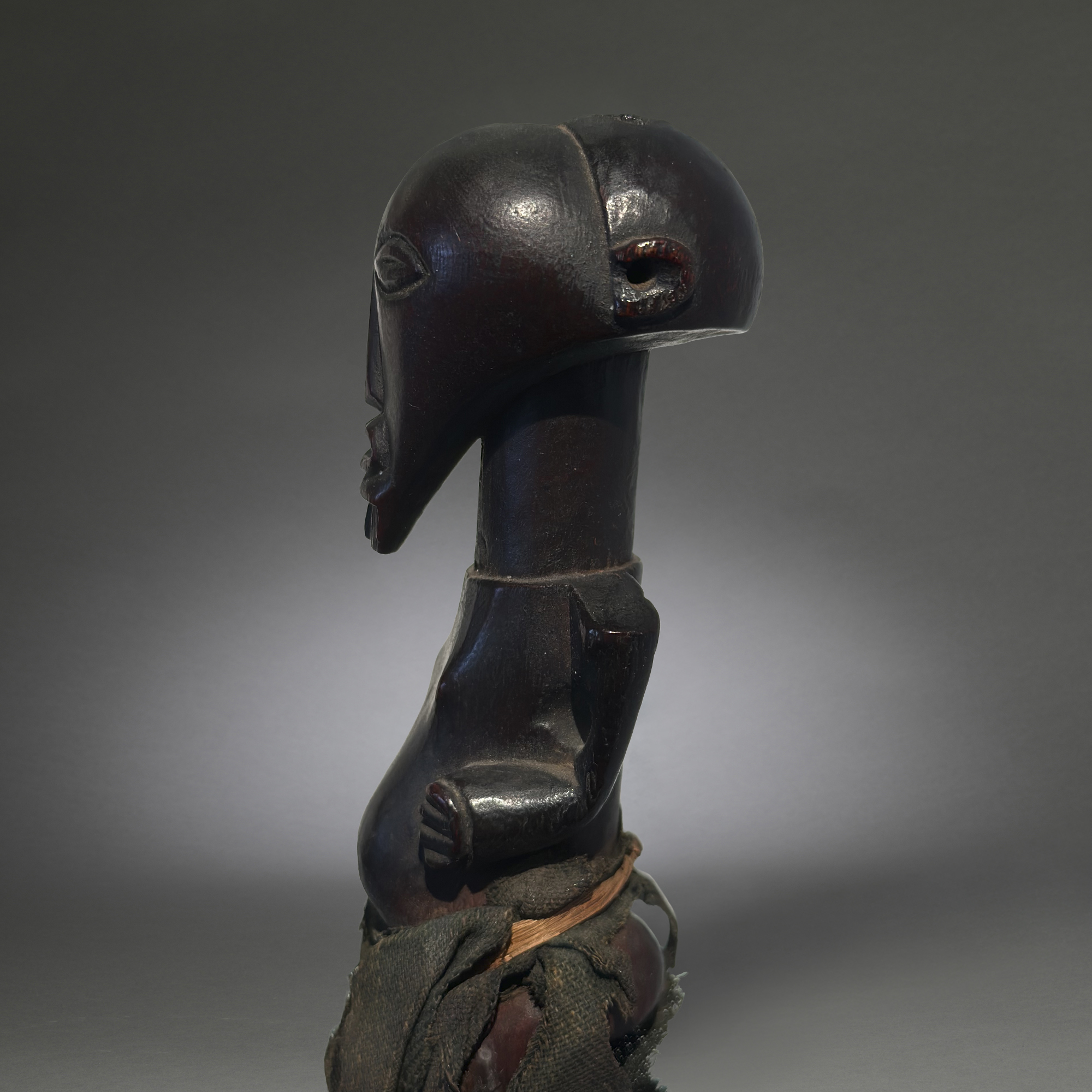
Formally, this is a refined and disciplined example that adheres to convention, with an enlarged head and face, commanding expression, and poised stance with abstracted arms framing an extended abdomen. These features underscore concepts of containment and controlled force, which scholars have identified as central to Songye notions of efficacy and power. Olive green fabric is bound around the waist by a length of fiber, concealing blocky legs planted stoutly upon a rounded pedestal. The head and face are magnificently abstracted, with a nearly flat facial profile that tapers sharply down to a pointed chin. A bishimba charge is retained in the belly where it was originally inserted.
Probably Paul Guillaume (1891–1934), Paris, France
Earl Horter (1880–1940) Collection, Philadelphia, Pennsylvania, USA
Property from the Estate of Elizabeth Lentz Horter, 1985
Private collection