INUIT, ALASKA
Note: Marine ivory scraper is sold
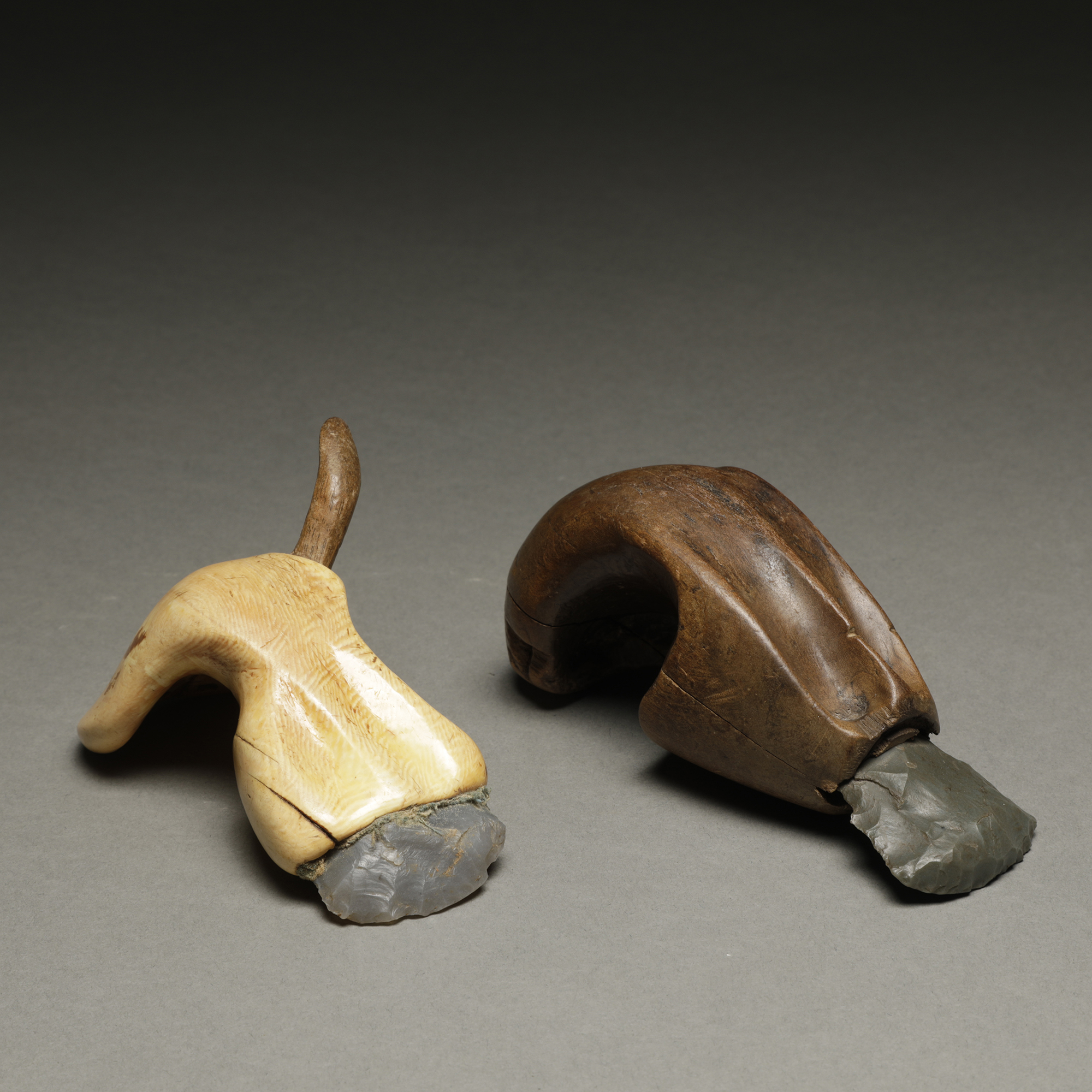
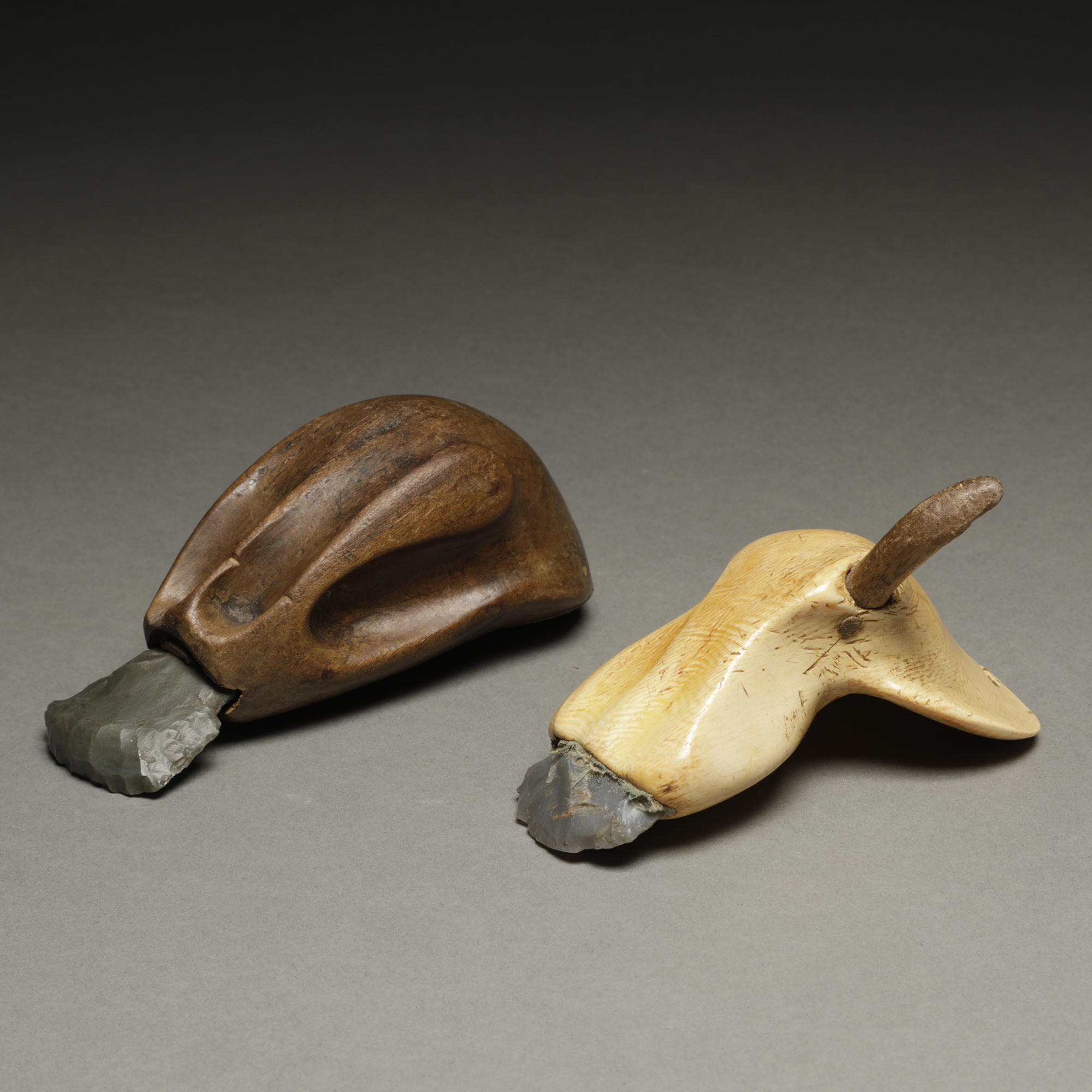
These fine Eskimo hide scrapers, dating to the nineteenth century or earlier, are a small showcase of the genius of Arctic craftsmanship. Both tools feature jade blades, a stone valued for its aesthetic beauty as well as its strength and resilience – qualities essential for processing animal hides in harsh Arctic conditions.
One scraper in the pair is crafted with a highly ergonomic hardwood handle, cut with finger grooves that allow the hand to fit perfectly over the tool. Its surface is thoroughly smoothed and weathered from age and long use. The companion scraper is carved from marine ivory, likely a walrus tusk. A carefully shaped and smoothed surface here again conforms to the shape of the hand, and a slender flyaway guard between the thumb and forefinger placements ensures a firm hold. Both these scrapers were clearly designed with a nuanced knowledge of manual control developed over generations.
Hide scraping was more than a technical task, it was a highly skilled and socially important activity. Properly prepared hides were critical for survival, and were used to make parkas, trousers, mittens, boots, tents, kayak coverings, and dog harnesses. The long and tough job of hide-working was often accompanied by oral tradition and songs.
Marine ivory example - private USA collection
Wood example - Brant Mackley Gallery, Santa Fe